
-
- Products
- Indoor Household Cords
- Appliance Cords
- General Purpose Short-Length Cords
- General Purpose Extension Cords
- Landscape & Decorating Cords
- Bright Color Extension Cords
- Oil-Resistant Extension Cords
- Cold-Flex Extension Cords
- VividFlex Power Cords
- EXTREME All-Weather Cords
- Cord Management
- Task Lights
- Adapters & GFCI Devices
- Where to Buy
- About
- Careers
- Glossary
- Catalog


Why Choose an Electric Panel Box?
Choosing an Electric Panel Box is not merely a matter of selecting a metal enclosure. It is a decision about safety, organization, serviceability, and future electrical demand. Inside the box, breakers must remain clearly identified and securely mounted. Outside, the enclosure must protect components from dust, moisture, impact, and accidental contact. A well-selected panel can make troubleshooting calmer, faster, and less expensive.
Mike Holt, a respected electrical educator and safety authority, has stated, “The electrical panel is the heart of the electrical system.” His observation explains why panel selection deserves careful attention. A dependable Electric Panel Box should match the system’s voltage, current capacity, circuit count, grounding method, and installation environment. It should also provide enough working space for neat conductor routing. Crowded wiring is difficult to inspect. It can hide loose connections and create avoidable heat.
Look closely at the details. A quality box feels rigid, closes firmly, and keeps labels readable. Compatibility matters too; breakers and accessories should be approved for the specific panel design. Local code requirements and manufacturer instructions must guide the final choice. A qualified electrician should verify the installation.
Bigger is not always better. Neither is cheaper.
Some projects need expansion space, while others need compact protection in a dry indoor location. I have seen how rushed selections create awkward bends, unclear labels, and frustrating maintenance later. That experience leaves an important question: are we choosing for today only, or building a safer system for tomorrow?
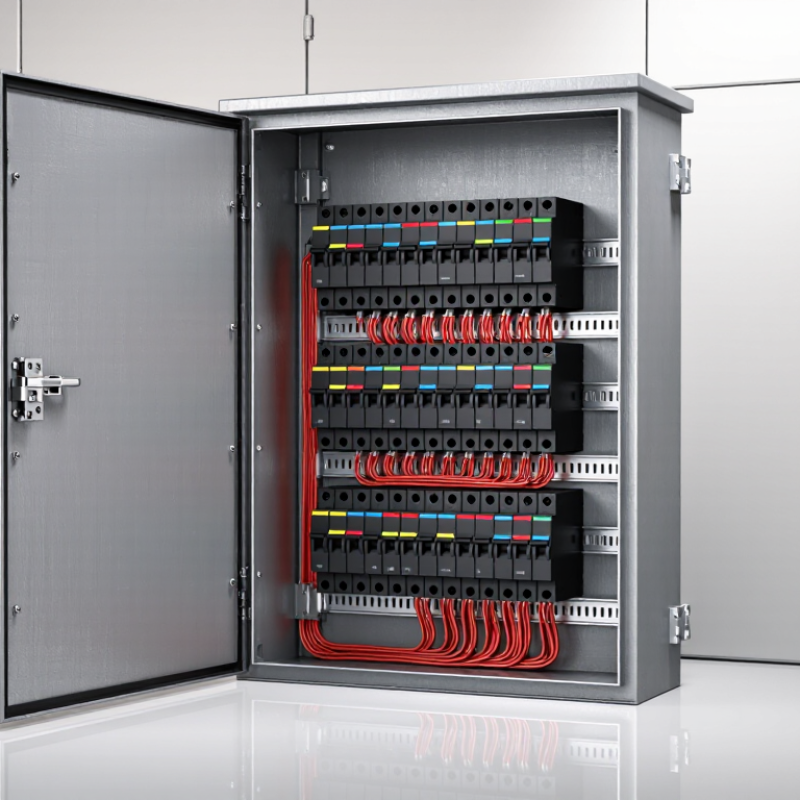
Table of Contents [Hide]
What Is an Electric Panel Box?
An electric panel box is the central distribution point for a building’s electrical system. It receives power from the utility service and sends it through separate branch circuits. Inside, circuit breakers protect wiring from overloads and short circuits. The main breaker can disconnect power to the entire panel during maintenance or emergencies. Neutral and grounding bars also help manage current safely.
Choosing the right panel box depends on the building’s electrical demand, available space, and future expansion plans. A small home may need fewer circuits than a workshop with heaters, pumps, or charging equipment. The enclosure should match the installation environment, especially where moisture, dust, or impact is possible. Clear circuit labels matter too. They save time when a breaker trips.
From practical inspections, loose connections and poor labeling cause avoidable confusion. A panel may look tidy while hiding an overloaded circuit. That detail is easy to miss. I once saw a spare breaker space mistaken for extra capacity, although the service rating had already been reached.
A qualified electrician should verify the service rating, conductor sizes, grounding, and local code requirements before installation. Never remove the panel cover casually. Even with the main breaker switched off, dangerous voltage can remain inside.
Good selection is not only about appearance or breaker count; it is about verified capacity, safe access, and dependable protection.