-
- Products
- Indoor Household Cords
- Appliance Cords
- General Purpose Short-Length Cords
- General Purpose Extension Cords
- Landscape & Decorating Cords
- Bright Color Extension Cords
- Oil-Resistant Extension Cords
- Cold-Flex Extension Cords
- VividFlex Power Cords
- EXTREME All-Weather Cords
- Cord Management
- Task Lights
- Adapters & GFCI Devices
- Where to Buy
- About
- Careers
- Glossary
- Catalog

Why Choose Damask Labels for Your Products?
A product label does more than display a brand name. It gives customers a close-up impression of the care behind a garment. Damask Labels use finely woven threads to create crisp lettering, detailed motifs, and a smooth, refined surface. On a jacket collar or shirt hem, that texture can feel more considered than a simple printed tag. Small details count.
The weave can also help preserve fine designs through regular handling and washing, though performance depends on the yarn, construction, and care routine. A dense pattern may keep small text readable, while a softer finish can reduce irritation against the skin. These qualities make damask a popular choice for clothing, accessories, and other fabric goods. Still, it is not automatically the right option for every product.
This article explores how damask labels are made, what affects their appearance, and where they work best. It also considers practical choices such as label size, edge finish, color contrast, and placement. A logo that looks clear on a screen may lose detail when woven at a small scale. Requesting and reviewing a physical sample can reveal issues that a digital proof misses. It takes an extra step. But it can prevent a label from feeling too stiff, appearing crowded, or clashing with the fabric. The best choice balances visual detail with comfort, durability, and the everyday experience of using the product.
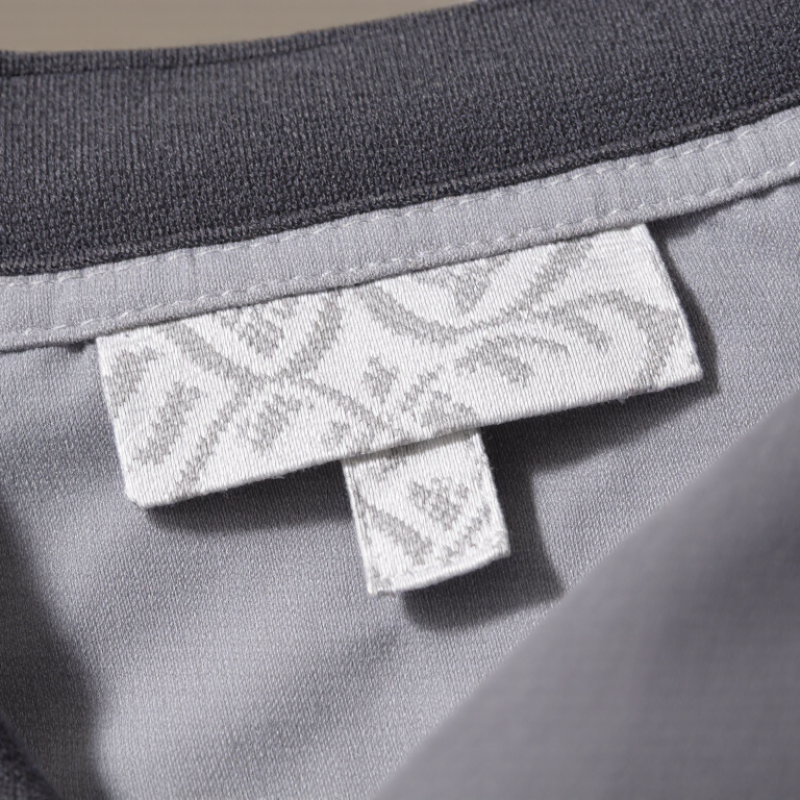
Table of Contents [Hide]
What Damask Labels Are and How They Are Woven
Damask labels are woven fabric labels, not printed patches. Their design is built from colored threads, so lettering and symbols become part of the cloth. The surface often feels smooth and slightly lustrous. Run a fingertip across one, and the fine weave is easy to notice.
The label is made on a jacquard loom, which controls individual warp threads as weft yarns pass across them. This allows small details and several colors to appear in a compact area. Thread density matters. A tighter weave can hold crisp shapes, while very fine wording may still blur or close up. Always check a physical sample when tiny text is important.
There is a trade-off. Damask can show detailed artwork, but it may cost more than simpler woven options, depending on quantity and specifications. The finished label is cut and may have folded or heat-sealed edges to suit its placement on a garment or accessory. I have seen attractive designs lose clarity when the artwork was crowded. Simpler often reads better. Ask about size, thread colors, and edge finishing before approving production.