
-
- Products
- Indoor Household Cords
- Appliance Cords
- General Purpose Short-Length Cords
- General Purpose Extension Cords
- Landscape & Decorating Cords
- Bright Color Extension Cords
- Oil-Resistant Extension Cords
- Cold-Flex Extension Cords
- VividFlex Power Cords
- EXTREME All-Weather Cords
- Cord Management
- Task Lights
- Adapters & GFCI Devices
- Where to Buy
- About
- Careers
- Glossary
- Catalog


What Is a Value Vacuum Pump and How Does It Work?
A Value Vacuum Pump is a practical tool for removing air, moisture, and other gases from a sealed system. It does not create perfect emptiness. Instead, it lowers pressure until the process reaches a useful vacuum level. This principle supports refrigeration servicing, laboratory testing, packaging, drying, and industrial maintenance.
Vacuum technology author John F. O’Hanlon offers a helpful perspective: “A vacuum pump does not remove pressure; it creates a pressure difference.” This idea explains why pump performance depends on the entire system. Hose length, fitting quality, oil condition, and leakage can change the final result. A powerful pump cannot fully correct a poorly sealed connection.
The operating process is fairly direct. The pump draws gas through an inlet, compresses it internally, and releases it through an exhaust port. Rotary vane models use moving vanes and oil to create a tight seal. Oil-free designs use different materials and may suit cleaner applications.
The details matter.
In real work, the vacuum gauge may fall slowly, stop early, or rise after isolation. That behavior can suggest moisture, a leak, or contaminated oil. Diagnosis is not always obvious. I have found that beginners often blame the pump too quickly, while experienced technicians inspect the hoses first.
This guide explains how a Value Vacuum Pump works, what its main components do, and how users can evaluate performance responsibly. It also considers practical limitations, because no pump performs perfectly under every condition.
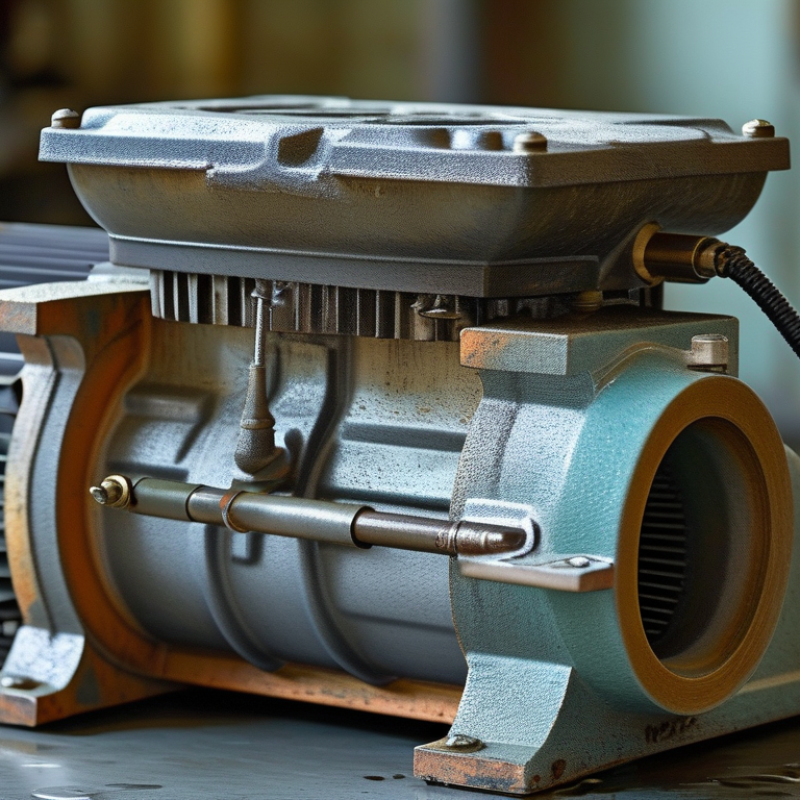
Table of Contents [Hide]
Value Vacuum Pump: Definition, Types, and Core Specifications
A value vacuum pump is a cost-conscious pump designed to remove gas from a sealed chamber. Its mechanism is simple: trapped gas enters the inlet, becomes compressed, and leaves through an exhaust valve. The useful result is lower pressure. It is not “value” merely because it is cheap. Total ownership also includes oil, seals, electricity, noise, and maintenance.
Common types serve different working conditions. Rotary-vane pumps often reach approximately 10⁻³ mbar and suit general laboratory or service work. Diaphragm pumps are oil-free and handle moderate vacuum levels, often near 1 mbar. Scroll and dry-screw pumps avoid oil contamination but usually cost more. Core specifications include ultimate pressure, pumping speed in m³/h, inlet size, motor power, gas-ballast function, noise, duty cycle, and vapor tolerance. ISO 21360-1:2020 provides a framework for measuring pumping speed and ultimate pressure, supporting fairer comparisons.
Market data shows why selection matters. Grand View Research estimated the global vacuum-pump market at roughly USD 5.8 billion in 2023, with steady growth projected through 2030. MarketsandMarkets also forecasts continued expansion, although its estimates differ by scope and methodology. That difference deserves attention. A catalog number may describe ideal laboratory conditions, not a wet process at 40°C. In field use, technicians should check the actual operating pressure, leak rate, service interval, and vapor load. The smallest pump is rarely the best choice. Sometimes, it only works harder.