
-
- Products
- Indoor Household Cords
- Appliance Cords
- General Purpose Short-Length Cords
- General Purpose Extension Cords
- Landscape & Decorating Cords
- Bright Color Extension Cords
- Oil-Resistant Extension Cords
- Cold-Flex Extension Cords
- VividFlex Power Cords
- EXTREME All-Weather Cords
- Cord Management
- Task Lights
- Adapters & GFCI Devices
- Where to Buy
- About
- Careers
- Glossary
- Catalog


What Is a TS11 Pneumatic Breaker and How Does It Work?
A TS11 Pneumatic Breaker is a compact impact tool designed to fracture hard materials with repeated piston strikes. It commonly appears in construction, repair, quarrying, and maintenance work. Its power comes from compressed air, not an electric motor or fuel engine. That difference matters in dusty or demanding work areas.
The operating cycle is direct. Compressed air enters the breaker through its inlet. Internal valves guide the air above and below a piston. The piston moves rapidly and transfers force to the working tool. The tool then strikes rock, concrete, masonry, or another approved surface. Exhaust air leaves through the outlet, and the cycle repeats many times each second. It sounds simple. It is not entirely simple.
Performance depends on air pressure, hose size, lubrication, tool condition, and operator technique. A restricted hose can weaken each blow. Poor lubrication can increase wear around moving parts. A loose connection may waste air and create unnecessary noise. Experienced users inspect these details before demanding full impact power. They also confirm the manufacturer’s specifications, because TS11 configurations may differ between suppliers or production periods.
This guide explains the TS11 Pneumatic Breaker through its main components, working sequence, practical applications, and maintenance needs. It also considers limitations that product descriptions sometimes overlook. No tool works perfectly in every material. The breaker may feel powerful, yet incorrect pressure or a damaged bit can reduce results quickly. Reliable operation requires training, protective equipment, controlled handling, and regular inspection. Safety should remain part of the mechanism, not an afterthought.
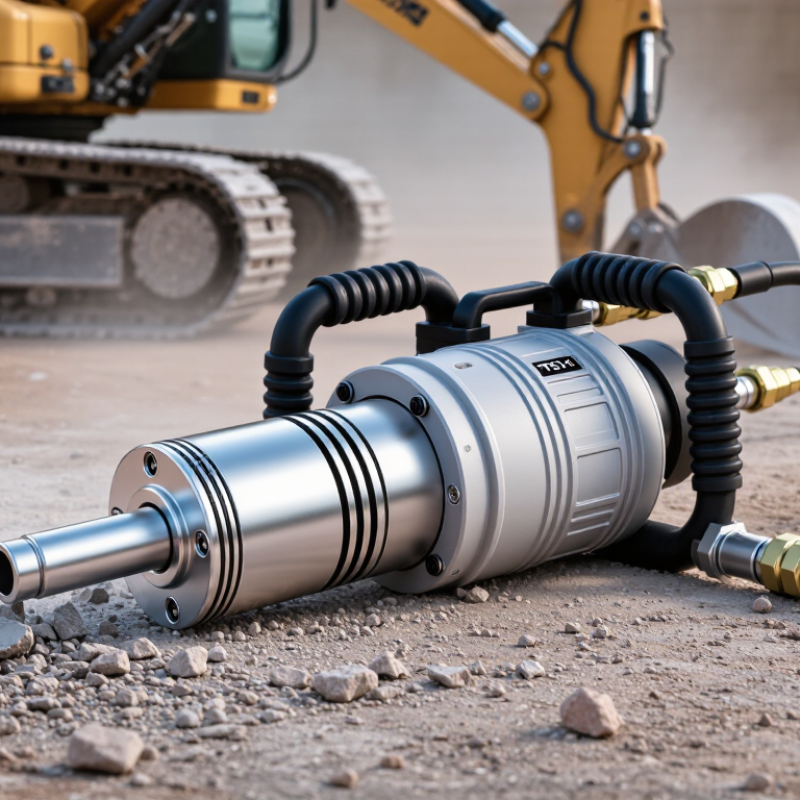
Table of Contents [Hide]
TS11 Pneumatic Breaker: Definition, Design, and Core Components
What Is a TS11 Pneumatic Breaker and How Does It Work?
A TS11 pneumatic breaker is a compact impact tool powered by compressed air. Its designation can vary between suppliers, so technical drawings should confirm the exact specification. The main assembly includes a steel housing, air inlet, control valve, cylinder, piston, tool retainer, and exhaust passages. Inside the cylinder, compressed air moves the piston back and forth. The piston strikes a working tool, such as a chisel or moil point. That repeated impact breaks concrete, masonry, or compacted material. It is simple, but not effortless.
Its design depends on balanced airflow and precise sealing. The valve directs air above and below the piston. The retainer keeps the tool aligned during impact. Lubrication reduces friction, while exhaust ports release used air and heat. The U.S. Department of Energy reports that compressed air can consume 10% to 15% of industrial electricity, and sometimes more. Therefore, leaks and low-pressure operation can increase running costs. Noise and vibration also require attention. The design is effective, yet operator comfort may be underestimated.
Tips: Check hose diameter, air pressure, and coupler condition before use. Drain moisture from the airline. Apply the specified pneumatic oil. Inspect the retainer and tool shank frequently. A worn seal may cause weak impacts and excessive air use. The U.S. National Institute for Occupational Safety and Health recommends controlling noise and vibration exposure, not merely wearing protection. Field testing should guide maintenance intervals, because dusty sites rarely behave like laboratory conditions.