Top Organic Fertilizer Processing Plant Manufacturers?
Organic fertilizer is moving from a waste-management option toward a measurable agricultural input. The UNEP Food Waste Index Report 2024 estimates that 1.05 billion tonnes of food were wasted in 2022. Much of this material could become compost, digestate, or other soil amendments when processed correctly. The FAO also reports significant food losses before retail, creating a large and uneven feedstock supply.
This is where an Organic Fertilizer Processing Plant becomes important. Modern manufacturers must manage moisture, particle size, oxygen, temperature, and curing time. A reliable line may include shredders, mixers, compost turners, screening machines, dryers, granulators, and packing equipment. Each stage affects nutrient stability and product safety. Dr. Elaine Ingham, a soil microbiologist, has stated, “Compost is the single most important soil amendment.” Her point reflects practical experience: biological quality matters more than attractive packaging.
The best manufacturers combine equipment performance with traceable process control. They should explain capacity using real feedstock conditions, not only laboratory figures. They should also provide emission controls, laboratory testing, maintenance plans, and operator training. The World Bank’s What a Waste 2.0 report highlights the growing pressure on global waste systems, strengthening the case for resource recovery. Still, a processing plant is not automatically sustainable. Poorly cured material can smell, lose nitrogen, or harm crops. That uncomfortable detail deserves attention. This guide compares leading manufacturers through engineering experience, product consistency, after-sales support, and evidence-based performance. Some published claims remain difficult to verify. Buyers should ask for operating references, test results, and site-specific calculations before making a decision.
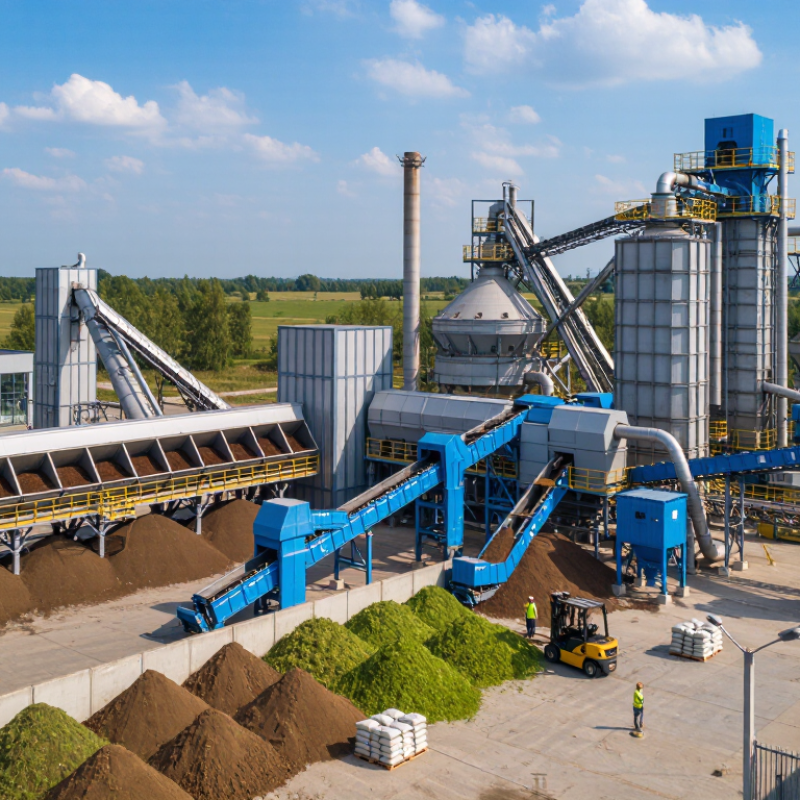
How to Identify Top Organic Fertilizer Processing Plant Manufacturers
Top Organic Fertilizer Processing Plant Manufacturers?
How to Identify Top Organic Fertilizer Processing Plant Manufacturers
A reliable manufacturer should understand raw materials, moisture control, fermentation, granulation, drying, cooling, and screening. Their engineers should explain each stage clearly, using practical figures instead of vague promises. Ask how the proposed line handles manure, compost, crop residue, or mixed feedstock. These materials behave differently during processing.
Visit the factory when possible. Observe welding quality, machine alignment, protective guards, dust collection, and housekeeping around the production line. Request production records from similar installations, not only attractive photographs. Check whether the manufacturer tests moisture, particle size, nutrient content, and equipment output. A capable supplier should also explain maintenance intervals and provide accessible technical support.
Look for documented quality procedures, traceable components, and trained commissioning staff. Clear drawings, spare-parts lists, operating manuals, and safety instructions show professional discipline. A manufacturer should welcome independent inspection and answer difficult questions without changing the subject. Be cautious when promised capacity ignores raw-material moisture or drying fuel consumption. I have found that polished showrooms can hide weak maintenance routines. That matters later. A small gap in calibration may produce uneven granules, higher waste, and frustrated operators. Price deserves attention, but dependable process control usually deserves more. Some evaluations still rely too heavily on brochures; production evidence is stronger.
Feedstock Control: Target a Compost C/N Ratio of 25–30:1
Top Organic Fertilizer Processing Plant Manufacturers?
Feedstock Control: Target a Compost C/N Ratio of 25–30:1
Reliable plant selection starts with feedstock control, not shiny machinery. Target a compost carbon-to-nitrogen ratio between 25:1 and 30:1. Dry straw, sawdust, and leaves add carbon. Poultry manure and green residues supply nitrogen. Measure materials instead of trusting appearance. Laboratory testing should confirm carbon, nitrogen, moisture, and salinity before mixing. Small errors can slow heating or create ammonia odors.
Experienced manufacturers should explain how mixers, shredders, and monitoring systems support this target. Ask for batch records, calibration procedures, and trial data using similar feedstock. A strong process design keeps moisture near 50–60%. This range helps oxygen move through the pile. Temperature probes should show active heating. Operators must turn or aerate material when oxygen levels fall.
Feedstock rarely behaves consistently. A wet manure load may need extra dry bulking material. Operators sometimes calculate the ratio correctly, yet poor particle size creates cold pockets. That result deserves scrutiny, not excuses. Manufacturers should help adjust recipes, document deviations, and test finished fertilizer for maturity and contaminants. Clear records build trust. Daily judgment still matters.
Process Design: Maintain 40–60% Moisture During Composting
Top Organic Fertilizer Processing Plant Manufacturers?
Process Design: Maintain 40–60% Moisture During Composting
Moisture control begins when raw materials enter the plant. Fresh manure may contain excessive water, while straw and dry leaves absorb it quickly. A reliable process design tests each batch before mixing. The target range is usually 40–60% moisture during active composting. Below this level, microbes work slowly. Above it, air movement becomes restricted, and unpleasant odors may develop.
Moisture is not a guess. Operators can use laboratory testing, calibrated sensors, and a simple hand-squeeze check. When a handful forms a loose ball without dripping, the mixture is often close to workable. It is not perfect. Small errors matter. A plant should include water spray lines, drainage channels, and adjustable mixers. These details help correct uneven moisture before the material reaches the fermentation area.
Turning equipment also influences moisture balance. Frequent turning can release heat and excess water, but aggressive handling may dry the outer layers. Experienced designers allow airflow gaps and monitor temperature, oxygen, and moisture together. A covered composting zone may reduce rainwater intrusion, yet it can trap humidity without proper ventilation. Raw materials change with seasons, so fixed recipes sometimes fail. The process should allow operators to add dry bulking agents or measured water during production. Simple records make those adjustments more dependable.
Top Organic Fertilizer Processing Plant Manufacturers? - Process Design: Maintain 40–60% Moisture During Composting
| Process Design Parameter | Typical Operating Range | Recommended Design Target | Why It Matters | Common Control Method |
| Moisture content during active composting | 40–60% wet basis | 50–55% at loading | Supports microbial activity while preserving air-filled pore space | Add process water when dry; mix in dry bulking material when wet |
| Carbon-to-nitrogen ratio | 25:1–35:1 | About 30:1 | Balances carbon used for energy with nitrogen required for microbial growth | Blend carbon-rich bulking agents with nitrogen-rich feedstocks |
| Temperature in the active phase | 45–65 °C | 55–60 °C | Accelerates decomposition and supports pathogen reduction | Adjust aeration, turning frequency, pile size, and moisture |
| Oxygen concentration in process air | Typically above 5% by volume | Maintain aerobic conditions | Prevents anaerobic odors and slows the formation of stable compost | Use perforated floors, forced aeration, or regular turning |
| Feedstock particle size | Approximately 10–50 mm | Uniformly mixed, with visible bulking structure | Increases contact area without eliminating air channels | Use shredding or crushing followed by screening and blending |
| Active composting residence time | 7–21 days | 10–14 days with controlled aeration | Provides sufficient time for rapid biological degradation | Select tunnel, vessel, windrow, or static-pile configuration |
| Curing and maturation time | 2–8 weeks | 3–6 weeks | Allows residual organic matter to stabilize before final processing | Use curing bays, covered storage, or aerated maturation areas |
| pH during composting | Approximately 5.5–8.5 | Near neutral to mildly alkaline | Provides a favorable environment for a broad microbial population | Monitor feedstock balance; avoid unnecessary chemical correction |
| Moisture after curing | 25–40% wet basis | Suitable for screening and granulation | Reduces clogging and improves the efficiency of downstream equipment | Use natural drying, a rotary dryer, or controlled low-temperature drying |
| Final screening size | 3–10 mm, depending on product use | Commonly 4–6 mm for granular products | Improves product uniformity and removes oversize contaminants | Use rotary, vibratory, or trommel screening equipment |
| Finished product temperature | Close to ambient temperature | Stable and not reheating | Indicates that biological activity has substantially declined | Extend curing time if the material reheats after turning or storage |
| Moisture monitoring frequency | At loading and throughout active composting | Daily in controlled systems | Detects evaporation, leakage, and uneven water distribution early | Use calibrated moisture meters and representative grab samples |
Note: The values shown are general process-design benchmarks for aerobic composting. Actual settings should be adjusted according to feedstock composition, climate, equipment configuration, throughput, and applicable local regulations.