-
- Products
- Indoor Household Cords
- Appliance Cords
- General Purpose Short-Length Cords
- General Purpose Extension Cords
- Landscape & Decorating Cords
- Bright Color Extension Cords
- Oil-Resistant Extension Cords
- Cold-Flex Extension Cords
- VividFlex Power Cords
- EXTREME All-Weather Cords
- Cord Management
- Task Lights
- Adapters & GFCI Devices
- Where to Buy
- About
- Careers
- Glossary
- Catalog


What Are the Top Electrical Enclosure Types for Buyers?
Choosing among Electrical Enclosure types is no longer a simple matter of selecting steel, stainless steel, or plastic. Buyers must match protection, heat control, installation conditions, and maintenance needs. A factory floor may expose equipment to oil mist, vibration, and metal dust. An outdoor cabinet may face rain, ultraviolet radiation, temperature swings, and accidental impact. The wrong choice can shorten component life and increase service interruptions.
Industry data shows why this decision deserves careful attention. Grand View Research reports that the global electrical enclosures market is expanding, supported by industrial automation, power distribution, and infrastructure investment. MarketsandMarkets also identifies smart manufacturing and connected electrical systems as major growth drivers. These trends increase enclosure requirements. Cabinets must protect wiring while supporting sensors, drives, networking equipment, and thermal management. More electronics often mean more heat.
Standards provide a reliable starting point. IEC 60529 defines IP protection ratings against solids and water. In North America, NEMA 250 classifies enclosure performance for environmental hazards. UL 50E addresses enclosure construction and environmental protection. These references do not replace site evaluation. They guide it. A buyer should examine corrosion exposure, cable entry points, internal heat load, cleaning methods, and available wall or floor space. Small details matter.
No single enclosure fits every project. That is the uncomfortable truth. A painted carbon-steel enclosure may suit an indoor control panel, while stainless steel may perform better in washdown areas. Polycarbonate can reduce weight and resist corrosion, but it may present different thermal and impact limits. This guide compares the top Electrical Enclosure types, their practical strengths, and the compromises buyers sometimes overlook. Performance matters. So does the installation reality.
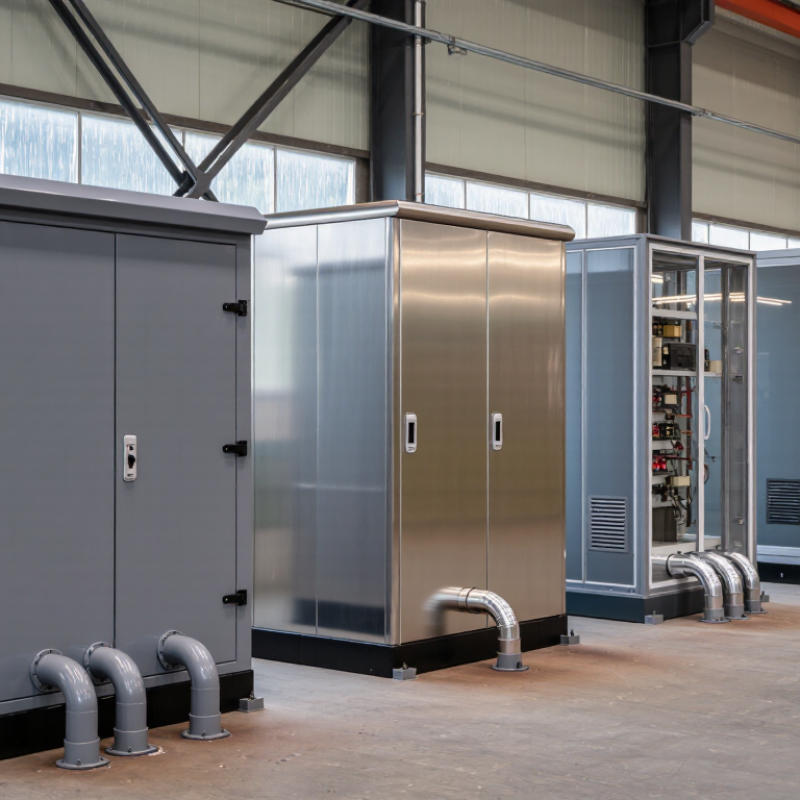
Table of Contents [Hide]
Classify Enclosures by NEMA and IEC 60529 Protection Ratings
What Are the Top Electrical Enclosure Types for Buyers?
Electrical enclosures are often classified through NEMA ratings or IEC 60529 IP codes. These systems describe protection, but they do not mean exactly the same thing. NEMA 1 suits clean, indoor areas with limited contact risks. NEMA 3R adds protection against rain and falling dirt. NEMA 4 handles water splashes, hose-directed water, and dust. NEMA 4X also addresses corrosion resistance, which matters near saltwater, chemicals, or washdown zones. NEMA 12 is commonly selected for indoor industrial spaces with dust, dripping oil, or cutting debris.
IEC 60529 uses the IP format, such as IP54, IP65, or IP66. The first digit measures protection against solid objects and dust. The second digit measures resistance to water. IP54 offers limited dust entry and water spray protection. IP65 provides dust-tight construction and protection from water jets. IP66 withstands stronger water jets, while IP67 covers temporary immersion under defined test conditions. The rating is specific.
A common buying mistake is treating IP67 as automatically superior for every installation. It may resist immersion, yet provide less information about corrosion, mechanical impact, or enclosure construction. NEMA ratings may cover these additional performance factors, depending on the standard and test method. Field checks should include cable glands, door seals, mounting position, drainage, and temperature. A perfect enclosure can fail after poor installation. Small gaps matter. Review the actual environment, cleaning method, moisture pattern, and maintenance access before choosing a rating.