China Top 10 Power Extension Cable Suppliers?

China has become a major sourcing base for power extension cable products. Its manufacturers serve homes, offices, workshops, retailers, and industrial buyers worldwide. However, supplier quality varies widely. A polished catalog does not always reflect factory capability.

This guide introduces ten notable Chinese power extension cable suppliers for international buyers. The selection considers manufacturing experience, product range, customization options, quality systems, and export performance. It also examines practical details, including copper conductor construction, insulation materials, plug design, cable length, overload protection, packaging, and minimum order quantities.

Small details matter. A reliable cable should feel flexible, yet not unusually thin. Its plug should fit firmly, without loose movement. Markings should remain readable after repeated handling. Buyers should also request test reports, applicable certifications, factory information, and sample products before placing large orders. Supplier claims require verification.

The ranking is not permanent. Market conditions, production teams, and certification status can change. Some companies may perform well for bulk orders but struggle with small custom projects. Others may offer excellent samples but weaker after-sales communication. That difference deserves attention.

Our comparison uses publicly available information, supplier communications, and common sourcing considerations. It should support due diligence, not replace it. Before choosing a partner, confirm technical specifications, destination-market requirements, lead times, warranty terms, and inspection procedures. A lower quotation may look attractive, but inconsistent copper quality or poor strain relief can create expensive problems later.

The following overview aims to make supplier comparison clearer, more practical, and easier to review. Some conclusions may need revision as new evidence appears. That is part of responsible sourcing.
China Top 10 Power Extension Cable Suppliers?

What Are Power Extension Cables and Why Choose Chinese Suppliers?

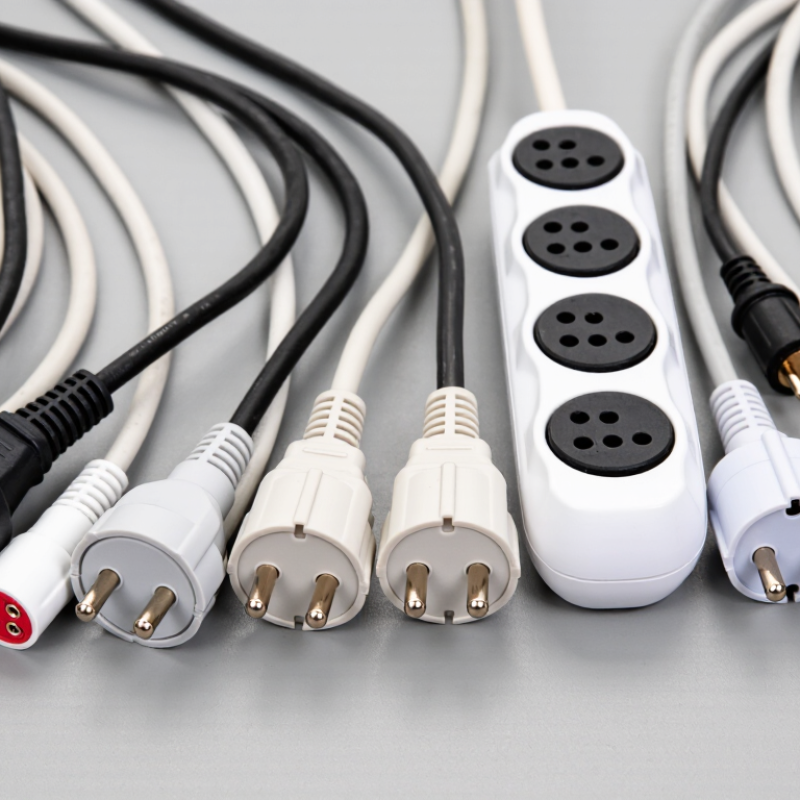
Power extension cables are flexible electrical assemblies that extend power from a wall outlet to devices farther away. They usually contain copper conductors, insulation, a protective outer jacket, plugs, and socket housings. Good designs also include strain relief, firm terminals, and heat-resistant materials. These details matter beside a workbench, under an office desk, or near household equipment.

Chinese suppliers attract buyers because they offer broad production capacity and flexible customization. Many factories can adjust cable length, conductor size, plug configuration, jacket color, labeling, and packaging. Their experience with international orders can also support documentation, sample approval, and batch production. However, a low quotation does not prove strong quality. It may hide thinner conductors or weaker insulation.

Reliable sourcing requires more than comparing prices. Buyers should request material specifications, factory audit records, product samples, and test reports from qualified laboratories. Check applicable electrical standards for the destination market. Ask how suppliers control copper purity, crimping strength, polarity, insulation resistance, and final inspection. A practical warning: one approved sample cannot represent every shipment. No factory is perfect, and packaging details are sometimes overlooked. Regular inspections, clear contracts, and traceable production records reduce that risk.

How to Evaluate China’s Top Power Extension Cable Suppliers

How to Evaluate China’s Top Power Extension Cable Suppliers

Choosing a power extension cable supplier requires more than comparing online prices. Check the factory’s production experience, equipment, and ability to handle your required cable length, plug type, conductor material, and rated load. A supplier should provide clear specifications, drawings, and material details before sampling. Vague answers are warning signs.

Request samples from different production batches when possible. Inspect the insulation surface, plug fit, strain relief, switch operation, and cable flexibility. Ask for test records covering continuity, insulation resistance, temperature rise, and overload performance. Independent laboratory reports can support the supplier’s claims, but verify the report number and testing scope. A certificate alone proves little.

A factory audit can reveal practical details. Look for incoming material checks, calibrated testing equipment, traceable batch labels, and controlled packing areas. Ask how rejected products are recorded and corrected. I have found that communication speed matters, especially when specifications change. Still, fast replies do not guarantee stable quality.

Compare sample results with mass-production controls. Confirm minimum order quantities, production lead times, replacement procedures, and packaging protection. A low quotation may hide weaker copper content, thinner insulation, or inconsistent assembly. No evaluation is perfect. My own early assessments sometimes focused too heavily on documents and missed small physical defects. Rechecking samples after negotiation is a sensible habit.

How to Evaluate China’s Top Power Extension Cable Suppliers

This benchmark uses practical procurement weights for evaluating power extension cable suppliers. Safety compliance should include applicable standards such as IEC 60884-1, IEC 60227 or IEC 60245, RoHS, and REACH. Electrical performance, material quality, factory quality control, customization capability, and delivery reliability should also be reviewed before supplier selection.

China’s Top 10 Power Extension Cable Suppliers

China’s Top 10 Power Extension Cable Suppliers are usually judged by manufacturing control, safety testing, and delivery reliability. The strongest suppliers offer copper conductors, heat-resistant insulation, secure plugs, and molded strain relief. These details matter when a cable is used beside office equipment, kitchen appliances, or outdoor tools.

A dependable supplier should provide clear specifications, including conductor size, rated voltage, current capacity, cable length, and fire-resistance grade. Factory audits, sample testing, and traceable batch records add practical confidence. Certifications such as CE, RoHS, or CCC may support different market requirements, but certificates alone are not enough. Request test reports from recent production.

Ask about minimum order quantities, private labeling, packaging strength, and replacement procedures. A reliable factory should answer these questions without vague promises. Lead times should include inspection and shipping preparation. Small details matter.

No supplier is perfect.

Some factories have excellent production lines but weak export communication. Others respond quickly but struggle with consistent assembly quality. Buyers should test samples under bending, plug insertion, heat, and load conditions before placing large orders. Pricing deserves attention, yet unusually low prices may reflect thinner copper, lighter insulation, or limited testing. China’s leading suppliers are not simply the cheapest choices; they are manufacturers that repeatedly deliver safe, compliant, and consistent extension cables.

Product Standards, Certifications, and Quality Control

When comparing China’s top 10 power extension cable suppliers, standards should lead the conversation, not catalog size. A reliable factory clearly states the conductor material, cross-sectional area, rated voltage, temperature range, and plug configuration. For common products, buyers may check IEC 60884, IEC 60227, IEC 60245, and relevant GB/T requirements. Market access may also require RoHS, REACH, CE, UKCA, or other documented conformity routes. Requirements vary by destination.

Good suppliers provide traceable test records for every production batch. During a factory audit, inspect incoming copper, insulation materials, plug components, and finished cable samples. Essential tests include conductor resistance, insulation resistance, dielectric withstand, flame behavior, bending endurance, tensile strength, and plug insertion performance. Samples should also be tested after thermal aging. This detail is often missed. Calibrated equipment matters, so request calibration dates and laboratory procedures. ISO 9001 can support process control, but it does not replace product-specific testing.

Before ranking suppliers, request recent reports from qualified laboratories and verify their testing scope. Compare approved samples with mass-produced cables. Random inspections should check cable length, wire gauge, molding quality, carton labels, and batch codes. In factory audits, small differences in copper stranding can reveal weak control. No supplier is perfect. A factory that reports a failed test and corrective action may be more dependable than one showing spotless files. Still, corrective action needs evidence.

How to Select the Right Chinese Supplier for Your Needs

China Top 10 Power Extension Cable Suppliers?

How to Select the Right Chinese Supplier for Your Needs

Global electricity demand is accelerating. The International Energy Agency’s Electricity 2024 report projected nearly 4% growth in 2024 and 2025. This pressure increases demand for dependable extension cables. However, supplier selection should begin with engineering data, not a polished catalogue. Check conductor cross-section, copper composition, insulation thickness, rated voltage, temperature range, and plug configuration. Small differences can cause overheating under continuous loads.

Request production samples from each shortlisted Chinese supplier. An independent laboratory should verify resistance, insulation strength, flexing performance, and flame behavior. IEC 60884-1 and IEC 60227 provide useful benchmarks for plugs and flexible cables, but destination-market requirements still differ. Ask for recent test reports, calibration records, batch traceability, and corrective-action evidence. Do not guess.

Procurement data also deserves attention. The International Copper Study Group’s 2024 market forecast placed refined copper usage above 26 million tonnes globally, showing how material costs can affect quotations. Compare copper weight, not only unit price. A lower quote may reflect thinner conductors or shorter cable lengths. I would also audit factory capacity, worker training, inspection points, packaging, and shipping history. A supplier can pass one audit and still drift later. Include sample approval, change notification, defect limits, and warranty terms in the contract. Video tours help, but they are not proof. A local inspection partner is often worth the cost.

China Top 10 Power Extension Cable Suppliers? - How to Select the Right Chinese Supplier for Your Needs

Rank Supplier Profile Typical Product Focus Common Voltage Common Current Cable Types Commonly Offered Relevant Standards to Request Typical MOQ Range Typical Production Lead Time Customization Capability Key Verification Priority
01 Profile A — High-volume manufacturer Household extension reels and multi-outlet power strips 220–240 V AC 10–16 A PVC flexible cable; H05VV-F; H07RN-F for selected industrial models IEC 60884-1, IEC 60884-2-7, RoHS, applicable national plug standard 500–2,000 pcs 20–35 days High Factory audit and thermal-load testing
02 Profile B — Custom OEM supplier Private-label power strips, plugs, switches and packaging 110–250 V AC 6–16 A PVC and rubber-insulated flexible cables IEC 60884-1, IEC 60227, IEC 60245, RoHS or REACH documentation 300–1,000 pcs 25–40 days Very high Sample approval and logo traceability
03 Profile C — Industrial cable specialist Heavy-duty extension cords and outdoor cable assemblies 220–250 V AC 10–32 A H07RN-F; H05RR-F; oil- and abrasion-resistant rubber cable IEC 60245-4, IEC 60309, IP rating test requirements 200–800 pcs 30–45 days High IP, flexing and insulation tests
04 Profile D — Retail-ready supplier Compact extension leads and retail blister-pack products 110–250 V AC 6–16 A H03VV-F; H05VV-F; PVC flat cable IEC 60884-1, IEC 60227-5, packaging and labeling requirements 500–3,000 pcs 20–35 days Medium–High Packaging accuracy and barcode control
05 Profile E — Low-MOQ development supplier Prototype batches and small private-label orders 110–250 V AC 6–16 A PVC flexible cable; braided decorative cable for suitable applications Applicable IEC or national standard, RoHS, electrical safety test report 50–300 pcs 15–30 days Medium Prototype consistency and component sourcing
06 Profile F — Export compliance supplier Multi-market extension cords for Europe, Asia and Australia 220–240 V AC 10–16 A H05VV-F; H07VV-F; market-specific flexible cable IEC 60884-1, CE-related technical file, RoHS, REACH where applicable 500–2,000 pcs 25–40 days High Destination-market certification
07 Profile G — Surge-protection specialist Power strips with overload protection and surge components 110–250 V AC 10–16 A PVC flexible cable; heat-resistant internal wiring IEC 60884-1, IEC 61643-11 for surge protective devices, RoHS 300–1,500 pcs 25–45 days High Surge, overload and fire-resistance testing
08 Profile H — Outdoor and construction supplier Outdoor leads, site reels and weather-resistant assemblies 220–250 V AC 16–32 A H07RN-F; neoprene or rubber-insulated cable IEC 60245-4, IEC 60309, IP44/IP54 test requirements 200–1,000 pcs 30–50 days Medium–High Ingress protection and mechanical durability
09 Profile I — Smart power accessory supplier Extension strips with USB charging and electronic controls 110–250 V AC 10–16 A PVC flexible cable; heat-resistant cable near electronic modules IEC 60884-1, EMC requirements, USB safety requirements, RoHS 500–2,000 pcs 30–50 days High EMC, charging and abnormal-operation tests
10 Profile J — Cost-focused volume supplier Standard extension cords for distributors and large projects 110–250 V AC 6–16 A PVC flexible cable; H03VV-F; H05VV-F IEC 60227, IEC 60884-1, RoHS, applicable destination-market requirements 1,000–5,000 pcs 20–35 days Medium Material specification and batch consistency
Selection note: The profiles above are anonymized sourcing categories rather than named companies or a verified commercial ranking. Actual voltage, current, cable construction, MOQ, lead time and certification status must be confirmed against the supplier’s current datasheet, test reports, factory audit and destination-market requirements before purchase.