
-
- Products
- Indoor Household Cords
- Appliance Cords
- General Purpose Short-Length Cords
- General Purpose Extension Cords
- Landscape & Decorating Cords
- Bright Color Extension Cords
- Oil-Resistant Extension Cords
- Cold-Flex Extension Cords
- VividFlex Power Cords
- EXTREME All-Weather Cords
- Cord Management
- Task Lights
- Adapters & GFCI Devices
- Where to Buy
- About
- Careers
- Glossary
- Catalog


China Top 10 Lockout Station Manufacturers
Choosing a reliable Lockout Station manufacturer requires more than comparing product photos or advertised prices. China has a broad manufacturing base, serving factories, utilities, construction sites, and maintenance teams worldwide. However, supplier quality can differ significantly.
This guide examines ten leading China-based Lockout Station manufacturers and the factors that make them worth consideration. The evaluation focuses on product durability, manufacturing experience, safety design, customization, certifications, and customer support. A practical station should keep padlocks, tags, hasps, breaker lockouts, and warning labels organized in one visible location. It should also withstand dust, oil exposure, frequent handling, and busy industrial environments.
Details matter.
A strong manufacturer normally provides clear material information, dimensional drawings, sample services, and traceable quality procedures. Stainless steel, powder-coated metal, and impact-resistant plastic each suit different workplaces. Buyers should review locking capacity, wall-mounting methods, label visibility, and compatibility with existing isolation procedures. Product claims should be checked against test records and current documentation, not accepted automatically.
This overview is designed for procurement managers, safety professionals, and distributors seeking dependable partners. It considers real purchasing concerns, including lead times, minimum order quantities, packaging, export experience, and after-sales communication. Yet no ranking remains perfect forever. Factory capabilities change, and public information may be incomplete. Readers should confirm specifications, certifications, and production capacity directly before making a final decision. The best choice is rarely the cheapest station. It is the one that remains organized, visible, and reliable when maintenance work becomes urgent.
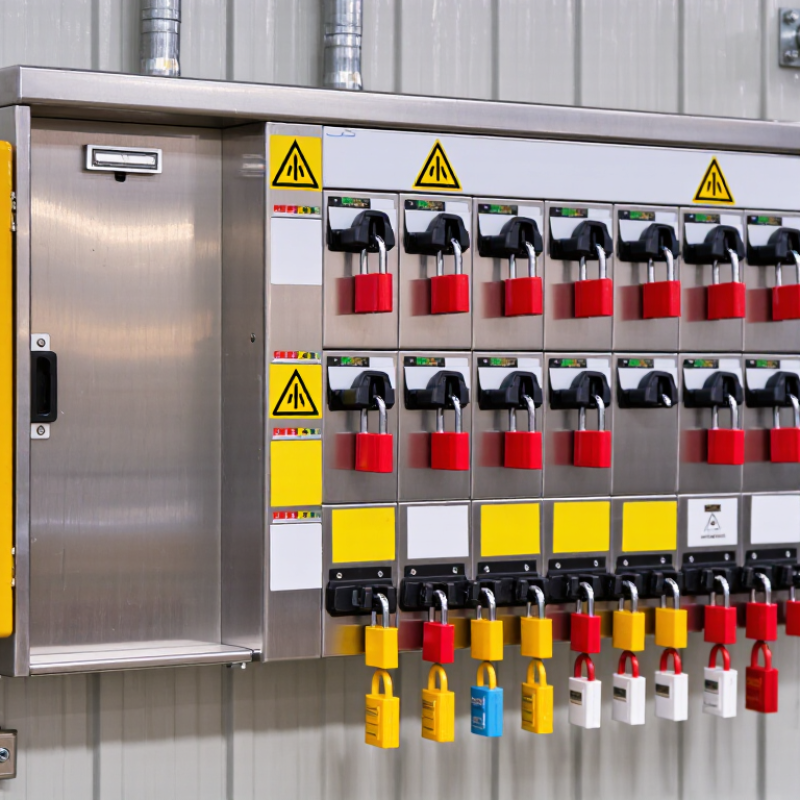
Table of Contents [Hide]
Lockout Stations Defined: OSHA 1910.147, ISO 45001, and ANSI Z244.1
China’s top 10 lockout station manufacturers should be assessed against safety standards, not appearance alone. A lockout station stores padlocks, tags, hasps, and group-lockout devices near hazardous energy points. OSHA 1910.147 requires employers to control electrical, mechanical, hydraulic, pneumatic, and thermal energy during servicing. OSHA’s Fiscal Year 2023 enforcement data listed 2,554 lockout/tagout violations, showing that basic procedures still fail in real workplaces.
ISO 45001 adds a broader management approach. It requires hazard identification, worker participation, documented controls, and continual improvement. ANSI Z244.1 addresses the wider use of hazardous-energy control methods, including alternative measures when full lockout is not suitable. A reliable manufacturer should provide durable labels, clear device compatibility, corrosion-resistant materials, and traceable inspection information. In practice, a crowded cabinet can slow response. I have seen stations with spare locks but no visible procedure. That weakness matters during a rushed maintenance task.
Tips: Check whether each station matches your written energy-control procedure. Verify lock and tag quantities monthly. Keep emergency contacts visible. Photograph the station after inspection. Do not assume a full cabinet proves compliance. OSHA data indicates enforcement remains active, while ISO 45001 certification reports show continuing global adoption of structured occupational safety systems. Still, certification alone cannot replace hands-on training. A short worker interview may reveal more than a polished audit file. Some stations also need redesign after equipment changes, and this is often overlooked.