
-
- Products
- Indoor Household Cords
- Appliance Cords
- General Purpose Short-Length Cords
- General Purpose Extension Cords
- Landscape & Decorating Cords
- Bright Color Extension Cords
- Oil-Resistant Extension Cords
- Cold-Flex Extension Cords
- VividFlex Power Cords
- EXTREME All-Weather Cords
- Cord Management
- Task Lights
- Adapters & GFCI Devices
- Where to Buy
- About
- Careers
- Glossary
- Catalog


10 Tips for Choosing the Right Battery Storage System
Choosing the right Battery Storage System is no longer a simple equipment purchase. It is a long-term energy decision. The best option depends on your site, electricity demand, budget, and safety expectations. A small home system may prioritize compact design and backup power. A commercial facility may need higher capacity, rapid response, and reliable thermal management.
Dr. Imre Gyuk, a respected energy storage expert, has said, “Energy storage is the key to unlocking the full potential of renewable energy.” That idea guides this article. Storage can capture excess solar power at noon and release it after sunset. Yet performance claims need careful examination. Battery chemistry, usable capacity, cycle life, warranty terms, and installation conditions can change the real value. Marketing numbers often look better than daily results.
Details matter.
These ten practical tips will help readers compare systems with greater confidence. They will examine power ratings, energy capacity, safety controls, monitoring software, maintenance needs, and future expansion. They will also consider how temperature affects battery performance. A garage in Arizona does not provide the same operating conditions as a basement in Norway. Neither does every installer offer equal expertise.
There is no perfect system. That is worth admitting. A cheaper battery may reduce upfront pressure, but replacement costs could appear sooner. A larger system may provide comfort, yet remain underused. Careful buyers should review actual load data, ask precise questions, and compare independent specifications. The goal is not to choose the most impressive Battery Storage System. It is to choose one that performs reliably in real conditions.
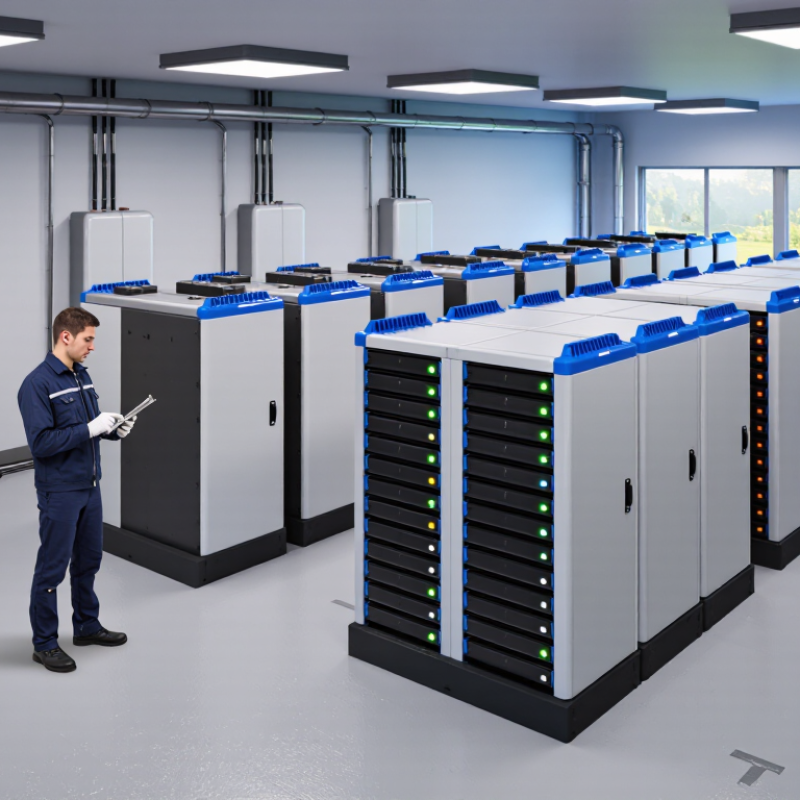
Table of Contents [Hide]
Understanding Battery Storage System Types and Applications
Choosing the right battery storage system begins with its chemistry and daily task. Lithium-ion systems suit frequent cycling, compact sites, and fast response. Their round-trip efficiency often reaches 85–95%. Flow batteries usually provide longer discharge periods and lower fire risk, but they need more space. Lead-acid systems remain practical for backup use, although deeper cycling can shorten their service life. Sodium-ion technology is developing, yet its commercial track record is still limited. Match the chemistry to the duty cycle, not the headline capacity.
Applications differ sharply. A household system may store midday solar power for evening cooking and lighting. Commercial systems can reduce demand charges during a factory’s busiest hour. Utility-scale projects often support grid balancing, renewable integration, and four-hour energy shifting. The International Energy Agency reported that global battery storage additions reached about 42 GW in 2023, more than doubling from 2022. The same report indicates that battery capacity must expand roughly sixfold by 2030 under clean-energy targets.
Check usable energy, power rating, degradation, temperature range, and maintenance access. A 100-kWh nameplate may deliver less after reserve limits and conversion losses. NREL’s 2024 Annual Technology Baseline treats four-hour storage as a key utility benchmark, but actual economics depend on duration and cycling. Compare total lifetime cost, not only purchase price. Safety testing, monitoring quality, and installer experience also matter. A neat spreadsheet can still mislead. Site conditions often expose the missing assumption.