
-
- Products
- Indoor Household Cords
- Appliance Cords
- General Purpose Short-Length Cords
- General Purpose Extension Cords
- Landscape & Decorating Cords
- Bright Color Extension Cords
- Oil-Resistant Extension Cords
- Cold-Flex Extension Cords
- VividFlex Power Cords
- EXTREME All-Weather Cords
- Cord Management
- Task Lights
- Adapters & GFCI Devices
- Where to Buy
- About
- Careers
- Glossary
- Catalog


What Is a pH Meter and How Does It Work?
A Ph Meter is more than a small laboratory device with a glass probe. It converts hydrogen-ion activity into a readable pH value, usually through a voltage difference between a glass electrode and a reference electrode. The result appears on a digital screen, often within seconds. In a beaker, this invisible chemical change becomes a clear number.
Dr. Arnold O. Beckman, who developed the first commercial electronic pH meter, described his breakthrough modestly: “It was a simple idea, but it took a lot of work to make it practical.” His experience remains relevant. A Ph Meter can provide excellent accuracy, but only when the operator calibrates it correctly, rinses the probe, and controls temperature. The instrument is not magic.
Industry research reflects its broad use. Grand View Research reports that the global pH meters market is expanding across water treatment, food production, pharmaceuticals, and environmental testing. The U.S. Environmental Protection Agency identifies pH as an important indicator of drinking-water quality, commonly monitored within a recommended range of 6.5 to 8.5. These figures show why reliable measurement matters.
Still, a displayed value can mislead. A dry electrode, trapped air bubble, contaminated buffer, or careless sampling may produce false confidence. I have found that the most overlooked step is often simple: allowing the probe to stabilize. This guide explains what a Ph Meter measures, how its electrodes work, and why correct maintenance can matter more than a sophisticated screen.
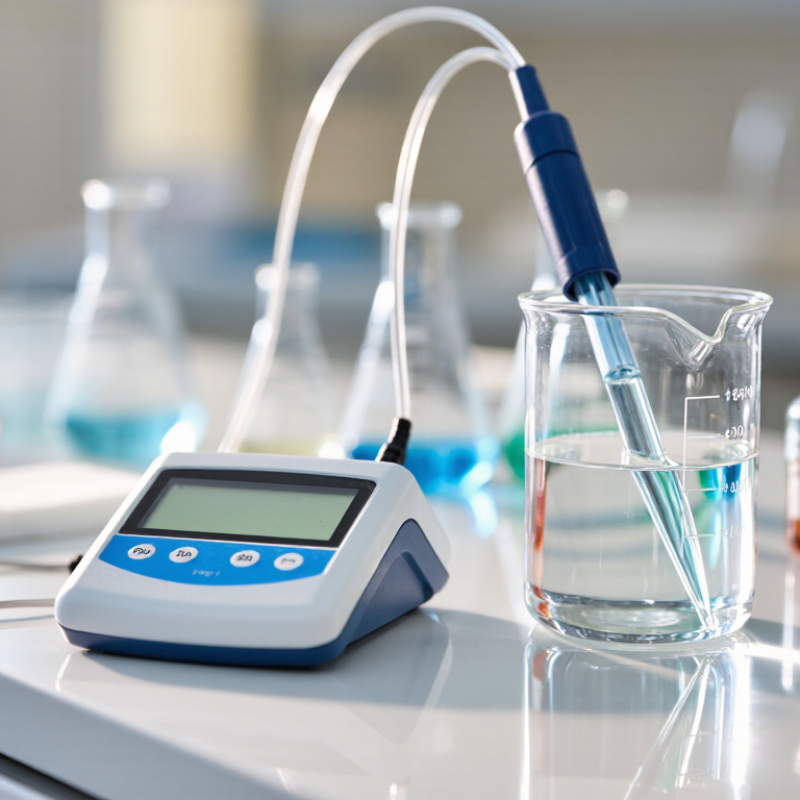
Table of Contents [Hide]
What Is a pH Meter and What Does It Measure?
A pH meter measures how acidic or alkaline a liquid is. It does not directly count hydrogen ions. Instead, it estimates hydrogen-ion activity through an electrochemical response. The scale runs from 0 to 14 under common conditions. A pH of 7 is neutral, while lower values indicate acidity. The scale is logarithmic. A sample at pH 6 has ten times more hydrogen-ion activity than one at pH 7. Small changes matter.
Inside the meter, a glass sensing electrode responds to hydrogen-ion activity. A reference electrode provides a stable comparison point. The instrument converts the voltage difference into a pH value. Temperature compensation improves accuracy because electrode response changes with temperature. It cannot correct a poorly collected sample. The U.S. EPA Secondary Drinking Water Standards list a pH range of 6.5 to 8.5 for drinking water. ISO 10523:2008 also defines procedures for measuring pH in water samples.
Good practice begins with calibration using certified buffer solutions. The electrode should be rinsed with purified water and gently blotted, not wiped. Air bubbles can distort the reading. Dirty glass may respond slowly. That is easy to overlook. In field testing, unstable temperatures, weak sample mixing, and expired buffers can create false confidence. A reliable measurement needs the number, the temperature, the calibration record, and the sampling conditions. Otherwise, the decimal point may look more precise than the test really is.