
-
- Products
- Indoor Household Cords
- Appliance Cords
- General Purpose Short-Length Cords
- General Purpose Extension Cords
- Landscape & Decorating Cords
- Bright Color Extension Cords
- Oil-Resistant Extension Cords
- Cold-Flex Extension Cords
- VividFlex Power Cords
- EXTREME All-Weather Cords
- Cord Management
- Task Lights
- Adapters & GFCI Devices
- Where to Buy
- About
- Careers
- Glossary
- Catalog


What Is an Indoor Extension Cord and How to Choose One?
An extension cord indoor product is more than a convenient cable behind your sofa. It is a temporary power solution designed for controlled, dry environments. The right choice depends on appliance load, cord length, wire gauge, plug design, and safety certification.
The U.S. Consumer Product Safety Commission reports approximately 3,300 residential fires involving extension cords each year. These incidents cause around 50 deaths and 270 injuries annually. The Electrical Safety Foundation International also warns that overloaded cords, damaged insulation, and cords beneath rugs create serious hazards. Small details matter. A warm plug is not normal.
John Drengenberg, Consumer Safety Director at UL Solutions, has said, “Extension cords are intended for temporary use, not permanent wiring.” That principle should guide every extension cord indoor decision. Choose a cord bearing a recognized testing mark, such as UL or ETL. Check its amperage rating before connecting heaters, air conditioners, or kitchen appliances. Longer cords often lose efficiency, especially when undersized.
A 16-gauge cord may suit a lamp or phone charger. High-wattage equipment usually needs a heavier 12- or 14-gauge cord. Never connect multiple extension cords together. Never hide one under a carpet.
Still, labels can be confusing. Marketing language does not replace technical ratings. Measure the distance, read the appliance label, and inspect the cord before every use. If the cable feels hot, smells burnt, or shows exposed wires, replace it immediately. Convenience is useful, but it can encourage careless habits. The safest cord is the one matched precisely to the job.
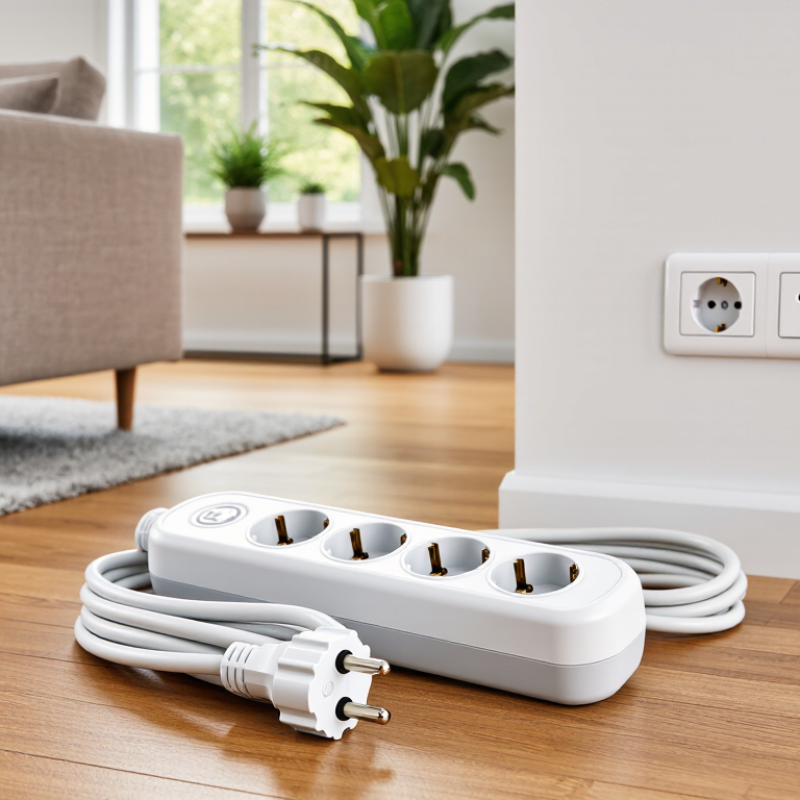
Table of Contents
[Hide]
What Is an Indoor Extension Cord?
An indoor extension cord is a flexible electrical cable that extends power from a wall outlet to a nearby device. It usually has one plug and one or more sockets. People commonly use it for lamps, fans, televisions, chargers, and small household tools. Its insulation is designed for dry indoor spaces, not rain, snow, or damp floors.
The cord’s length and wire gauge affect safe performance. Longer cords can experience more voltage drop, especially when powering demanding appliances. A thicker conductor generally handles higher loads more effectively. Check the cord label and compare its capacity with the appliance’s wattage. Never connect multiple extension cords together. That habit can increase heat and create hidden risks.
From practical use, I have found that a cord lying across a doorway becomes a trip hazard quickly. Keep it away from carpets, heaters, sinks, and sharp furniture edges. Inspect the plug, insulation, and sockets before each use. Cracks, loose connections, or warm plastic deserve immediate attention. An indoor cord is temporary convenience, not a replacement for permanent wiring. I still sometimes choose a cord that is longer than necessary, which creates unnecessary clutter. A shorter, properly rated cord is usually the more careful choice.
Related Posts
-
10 Tips for Choosing the Right Extension Wire?
-
Top 10 Benefits of Using HD Extension Cords for Your Power Needs?
-
How to Choose a Short Extension Cord in 2026?
-
What Are the Best Long Extension Cords in 2026?
-
Best 10 Short Extension Cord Options for Every Need?
-
How to Choose the Right Extension Cord Wire for Your Needs?