
-
- Products
- Indoor Household Cords
- Appliance Cords
- General Purpose Short-Length Cords
- General Purpose Extension Cords
- Landscape & Decorating Cords
- Bright Color Extension Cords
- Oil-Resistant Extension Cords
- Cold-Flex Extension Cords
- VividFlex Power Cords
- EXTREME All-Weather Cords
- Cord Management
- Task Lights
- Adapters & GFCI Devices
- Where to Buy
- About
- Careers
- Glossary
- Catalog


How to Choose a Network Switch for Your Business?
Choosing a Network Switch for your business is not a simple matter of counting ports. It affects speed, security, uptime, and future expansion. A small office may need a quiet 24-port switch with Power over Ethernet (PoE). A warehouse may require stronger uplinks, longer cable runs, and better temperature tolerance. The rack tells the truth. Dust, crowded patch panels, and blinking overload lights often reveal problems before software does. In practice, teams sometimes buy excessive capacity, while others discover too late that their “budget” switch cannot power new cameras or access points.
Industry research supports careful planning. IDC’s Worldwide Ethernet Switch Market Tracker identifies cloud infrastructure, data-center expansion, and faster Ethernet as major market drivers. Dell’Oro Group’s Ethernet Switch Five-Year Forecast also tracks growing adoption of higher-speed connections, including 100GbE and above, in demanding environments. These reports do not mean every company needs the fastest model. They show why port speed, uplink capacity, and upgrade paths deserve serious attention. Gartner’s networking research likewise emphasizes architecture, manageability, and operational simplicity, not hardware specifications alone.
This guide examines the practical decisions behind a reliable Network Switch. It considers managed versus unmanaged designs, PoE budgets, VLAN support, redundancy, warranty coverage, and security controls. It also questions common assumptions. More bandwidth is not always better. A lower-cost switch may become expensive after licensing, replacement, and downtime are included. Vendor datasheets can look perfect on a clean spreadsheet. Real networks are messier. Measure current traffic, count powered devices, inspect cabling, and leave room for growth. A sound choice should fit today’s workload without quietly limiting tomorrow’s business.
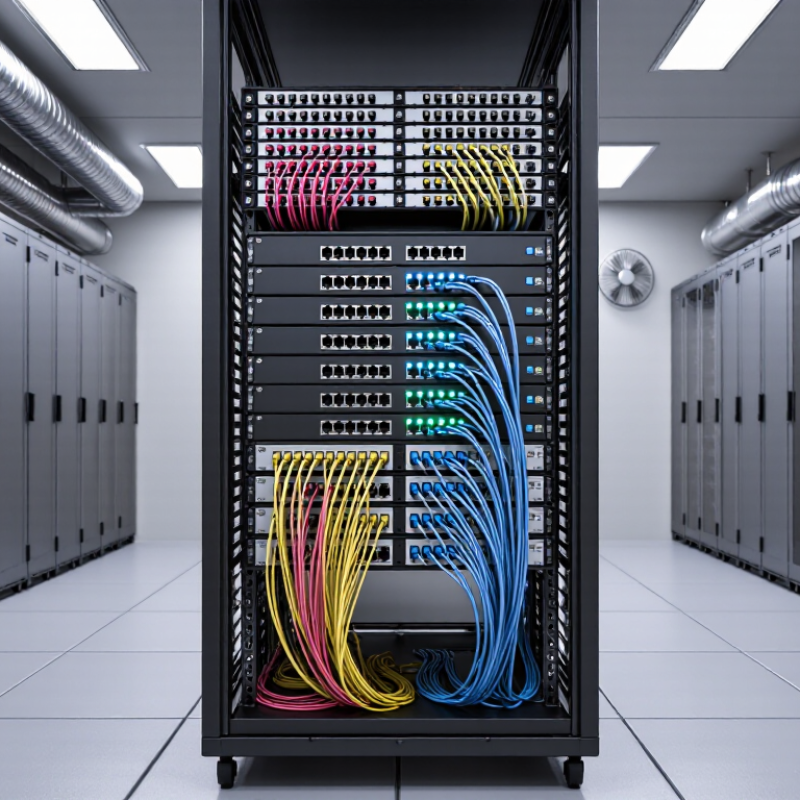
Table of Contents [Hide]
Understanding Your Business Network Requirements
Choosing a network switch starts with understanding how your business actually works. Count users, access points, cameras, phones, servers, and shared devices. Include equipment added during the next three years. The International Telecommunication Union reported 5.4 billion people online in 2023, representing 67% of the world’s population. That growth also raises expectations for fast, stable business connections.
Map daily traffic, not just device numbers. A small office with cloud applications may need more uplink capacity than a larger office using local servers. Check whether your network requires Power over Ethernet for phones, wireless access points, or security cameras. Measure current port usage during busy periods. Cisco’s Annual Internet Report projected 29.3 billion networked devices worldwide by 2023, showing why spare capacity matters. Ten unused ports may be cheaper than a disruptive replacement.
Security and management needs deserve equal attention. Separate guest access, staff systems, voice traffic, and sensitive equipment with virtual networks. Select monitoring features that reveal congestion, failed links, and unusual traffic. In practice, teams often focus on port speed and overlook installation conditions, backup power, and technician skill. That is a costly gap. I would document cable types, rack space, noise limits, and support requirements before comparing specifications. The perfect design on paper can still fail in a cramped closet. Recheck the assumptions.