
-
- Products
- Indoor Household Cords
- Appliance Cords
- General Purpose Short-Length Cords
- General Purpose Extension Cords
- Landscape & Decorating Cords
- Bright Color Extension Cords
- Oil-Resistant Extension Cords
- Cold-Flex Extension Cords
- VividFlex Power Cords
- EXTREME All-Weather Cords
- Cord Management
- Task Lights
- Adapters & GFCI Devices
- Where to Buy
- About
- Careers
- Glossary
- Catalog


How to Choose a Fire Resistant Fan?
Choosing a Fire-Resistant Fan is not simply a matter of selecting the highest temperature rating. The right choice depends on the fire scenario, airflow requirement, installation position, and verified test performance. A fan designed for smoke extraction may not suit a commercial kitchen, tunnel, generator room, or industrial process. These applications create different heat, pressure, contamination, and operating challenges.
Fire protection engineer James A. Milke emphasizes, “Fire protection is a systems problem, not a single-product problem.” That principle matters when comparing fan casing materials, impeller strength, motor placement, bearings, seals, and control systems. A casing may withstand intense heat, yet the motor controller could fail first. A powerful motor may deliver excellent airflow, but poor pressure performance can reduce smoke movement through long ducts.
Look beyond the brochure. Request the complete test report, temperature-time rating, airflow data, pressure curves, and approved installation limits. Check whether the stated rating applies to continuous operation, emergency duty, or both. Confirm that the product matches the required regional certification and local fire-safety requirements. A certificate without clear scope deserves careful questioning.
Small details matter. Imagine a fan running above a hot ceiling void, with ash entering the bearings and duct pressure changing during evacuation. That picture reveals weaknesses that a clean showroom cannot show. Noise, maintenance access, replacement parts, and emergency power compatibility also affect real reliability.
There is no perfect checklist. Even experienced buyers can overlook site conditions. A responsible selection process combines engineering calculations, documented testing, qualified installation, and periodic inspection. Safety depends on the whole system, not the label alone.
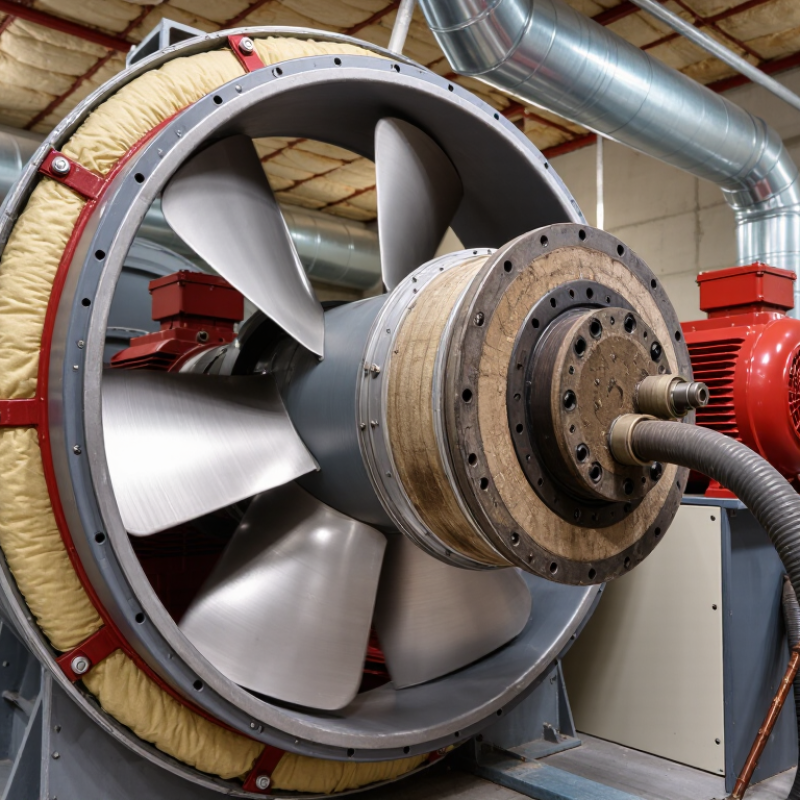
Table of Contents [Hide]
What Makes a Fan Fire Resistant?
What Makes a Fan Fire Resistant?
A fire-resistant fan is more than a metal casing. It must keep moving air, limit ignition, and survive verified heat exposure. The motor, bearings, wiring, impeller, seals, and mounting frame all matter. A weak cable can defeat a strong housing. So can grease buildup.
NFPA reported 1,504,500 U.S. fires in 2023, with 3,670 civilian deaths and 13,250 injuries. These figures do not prove that fans caused fires. They show why ventilation equipment deserves evidence, not marketing language. Check the test standard, temperature class, duration, airflow rating, and installation limits. EN 12101-3 classifications, such as F300 60, indicate operation at 300°C for 60 minutes. The exact class must match the smoke-control design.
Motor thermal protection is essential. Bearings need documented high-temperature performance. Insulation should resist heat and moisture. The fan should also limit flame spread through connected ducts and penetrations.
AMCA 212 addresses smoke-control fan performance, while AMCA 210 supports airflow and pressure testing. Ask for the complete test report, not only a certificate. Real sites are less tidy than laboratories.
Dust, vibration, poor wiring, and blocked inlets can reduce protection. I would inspect access panels and cable routes before accepting a specification. “Fire resistant” is not a universal promise. It is a tested performance claim, and sometimes the paperwork still leaves uncomfortable questions.