
-
- Products
- Indoor Household Cords
- Appliance Cords
- General Purpose Short-Length Cords
- General Purpose Extension Cords
- Landscape & Decorating Cords
- Bright Color Extension Cords
- Oil-Resistant Extension Cords
- Cold-Flex Extension Cords
- VividFlex Power Cords
- EXTREME All-Weather Cords
- Cord Management
- Task Lights
- Adapters & GFCI Devices
- Where to Buy
- About
- Careers
- Glossary
- Catalog


What Is a Fire Pump Hose and How Does It Work?
A Fire Pump Hose is more than a flexible tube attached to emergency equipment. It is a critical link between a fire pump, a water source, and the people controlling the response. When pressure rises, the hose must carry large volumes of water without twisting, bursting, or losing its connection. The details matter.
Fire protection engineer Russ Sanders has often emphasized a practical principle: “A fire pump is only as reliable as the system supporting it.” That observation applies directly to every Fire Pump Hose. The pump may generate strong pressure, but the hose, couplings, gaskets, and valves must work together. A damaged lining can restrict flow. A loose coupling can create a dangerous spray. Poor storage can leave permanent bends in the hose.
Inside this guide, we will examine what a Fire Pump Hose is, how it transfers pressurized water, and which components influence its performance. We will also consider hose diameter, working pressure, temperature limits, connection methods, inspection routines, and common installation mistakes. These details may seem basic. They are not.
A practical inspection might reveal cracked rubber, flattened sections, or corrosion around a coupling. Any of these warning signs deserves attention before an emergency occurs. Still, no hose system is perfectly protected from aging, misuse, or human error. That is worth admitting. Reliable fire protection depends on regular testing, competent installation, clear maintenance records, and decisions based on recognized safety standards rather than appearance alone.
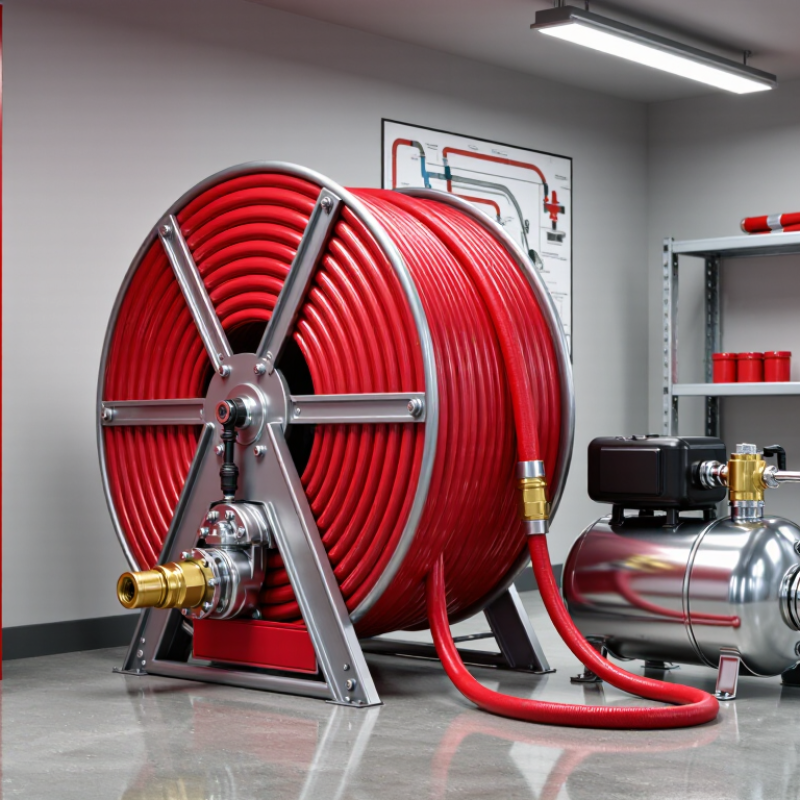
Table of Contents [Hide]
What a Fire Pump Hose Is and Its Role in Firefighting
What Is a Fire Pump Hose and How Does It Work?
A fire pump hose carries pressurized water from a pump to attack lines, standpipes, or other firefighting equipment. It is not simply a larger garden hose. Its jacket, lining, couplings, and pressure rating must match the pump system. Suction hose is built differently because it must resist collapse while drawing water from a tank, hydrant, or open source. Discharge hose carries water away from the pump under pressure.
The operating principle is direct. The pump raises water pressure, and the hose transfers that flow to the fireground. Couplings must lock securely, while the lining should limit friction and preserve usable flow. NFPA 1961, Standard on Fire Hose, addresses hose construction, testing, and performance. That matters because NFPA estimated 1,388,500 fires in the United States during 2023, causing 3,670 civilian deaths and about 22.1 billion dollars in direct property damage. The figures come from NFPA’s Fire Loss in the United States During 2023 report.
Small defects matter. A kink can restrict flow. A damaged coupling can leak under pressure. Field crews commonly inspect hoses for cuts, abrasion, heat damage, and weak gaskets before deployment. Testing schedules still vary by department, which deserves honest review. A hose may look serviceable while hiding internal wear. USFA guidance also emphasizes inspection, maintenance, and documented testing as part of reliable fireground equipment management.