
-
- Products
- Indoor Household Cords
- Appliance Cords
- General Purpose Short-Length Cords
- General Purpose Extension Cords
- Landscape & Decorating Cords
- Bright Color Extension Cords
- Oil-Resistant Extension Cords
- Cold-Flex Extension Cords
- VividFlex Power Cords
- EXTREME All-Weather Cords
- Cord Management
- Task Lights
- Adapters & GFCI Devices
- Where to Buy
- About
- Careers
- Glossary
- Catalog


10 Tips for Choosing Takeaway Food Containers?
Choosing the right Takeaway Food Containers is no longer a simple purchasing task. Containers protect food, shape customer experience, and influence operational costs. A leaking curry box can ruin a delivery before the first bite. A weak lid can also create complaints, refunds, and avoidable waste.
Industry data shows why this decision deserves closer attention. Mordor Intelligence estimates the global foodservice packaging market will continue expanding through 2029, driven by delivery, convenience, and changing dining habits. Grand View Research also reports strong growth across food packaging, including paper, plastic, and molded-fiber formats. These reports reveal market momentum, but they do not solve every practical problem. A container that performs well in a factory test may fail with steaming noodles, oily sauces, or a motorcycle delivery. Real kitchens are less predictable.
Sustainability adds another layer of responsibility. The United Nations Environment Programme reported that households, food service, and retail generated about 931 million tonnes of food waste in 2019. Packaging cannot solve food waste alone, yet poor packaging can make it worse. Material claims also need careful checking. “Compostable” does not always mean home-compostable, and recycling access differs between regions. This guide examines ten practical considerations, including leak resistance, heat tolerance, ventilation, material safety, stacking, branding, cost, and disposal instructions. Some choices will still involve compromise. That is the honest part. The best Takeaway Food Containers balance protection, customer expectations, regulatory compliance, and measurable environmental performance.
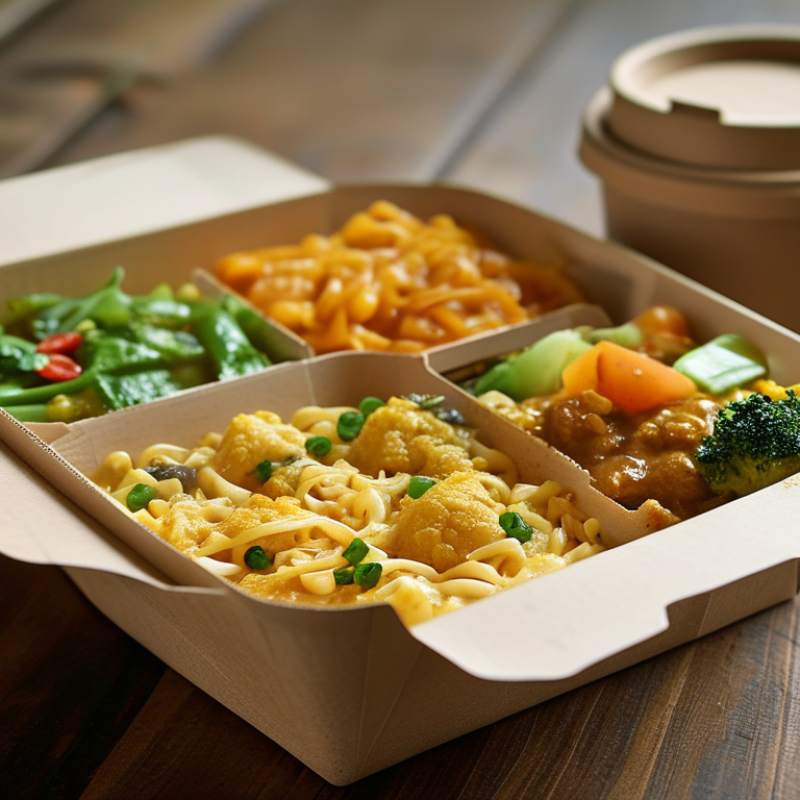
Table of Contents [Hide]
Understanding Takeaway Food Container Materials and Their Properties
10 Tips for Choosing Takeaway Food Containers
Understanding the material is more useful than trusting a green label. Paperboard containers feel light and print well, but steam can soften their fibers. A water-based coating may improve resistance, yet it can still fail with oily curry. Test a filled container for thirty minutes. That small check often reveals problems.
Bagasse containers handle hot, wet foods fairly well and provide a firm surface. However, their edges may weaken under heavy sauces.
Polypropylene is durable, leak-resistant, and suitable for reheating when clearly approved for that use. It is less rigid than some alternatives, so lids may shift during delivery.
PET offers good clarity for cold meals, but it is not a general solution for high heat. PLA looks plant-based, though it usually requires controlled industrial composting and performs poorly with very hot food.
Match the container to the meal, temperature, travel time, and stacking pressure. A noodle dish needs different protection from a dry sandwich. Check food-contact documentation, temperature limits, lid fit, and migration testing from the supplier. Local requirements still matter.
I once judged a container by its strong base and ignored the lid seal. The sauce leaked before arrival. That mistake changed my testing routine.
I now tilt filled samples, press the corners, and inspect condensation after delivery. No material is perfect. Selection becomes more reliable when practical handling tests support the technical information.