-
- Products
- Indoor Household Cords
- Appliance Cords
- General Purpose Short-Length Cords
- General Purpose Extension Cords
- Landscape & Decorating Cords
- Bright Color Extension Cords
- Oil-Resistant Extension Cords
- Cold-Flex Extension Cords
- VividFlex Power Cords
- EXTREME All-Weather Cords
- Cord Management
- Task Lights
- Adapters & GFCI Devices
- Where to Buy
- About
- Careers
- Glossary
- Catalog

What Is Custom Zinc Alloy Die Casting and How Does It Work?
Custom Zinc Alloy Die Casting is a precision manufacturing process for producing strong, detailed metal components at scale. It uses heated zinc alloy, a reusable steel die, and controlled pressure. The result can be a door handle, electronic housing, automotive bracket, or decorative fitting.
The process begins with die design and careful material selection. Engineers review wall thickness, draft angles, cooling channels, and expected loads. Molten zinc is then injected into the closed die at high speed. Pressure fills narrow ribs, sharp lettering, and small openings before the alloy solidifies. After ejection, operators trim excess metal, inspect dimensions, and apply finishing treatments such as plating, powder coating, or painting.
Small details matter. A poorly balanced gate can create air pockets or uneven filling. Excessive pressure may increase flash along the parting line. These defects are not merely cosmetic; they can affect assembly and service life. Experienced manufacturers use process monitoring, sample testing, and coordinate measuring equipment to reduce these risks. However, no casting method is automatically perfect. Tool wear, alloy temperature, and changing production conditions still require attention.
This article explains how Custom Zinc Alloy Die Casting works, from engineering concepts to finished components. It also considers practical limits, quality checks, cost factors, and design decisions. Reliable results depend on more than a powerful machine. They require verified drawings, suitable tolerances, experienced technicians, and honest communication between the customer and foundry.
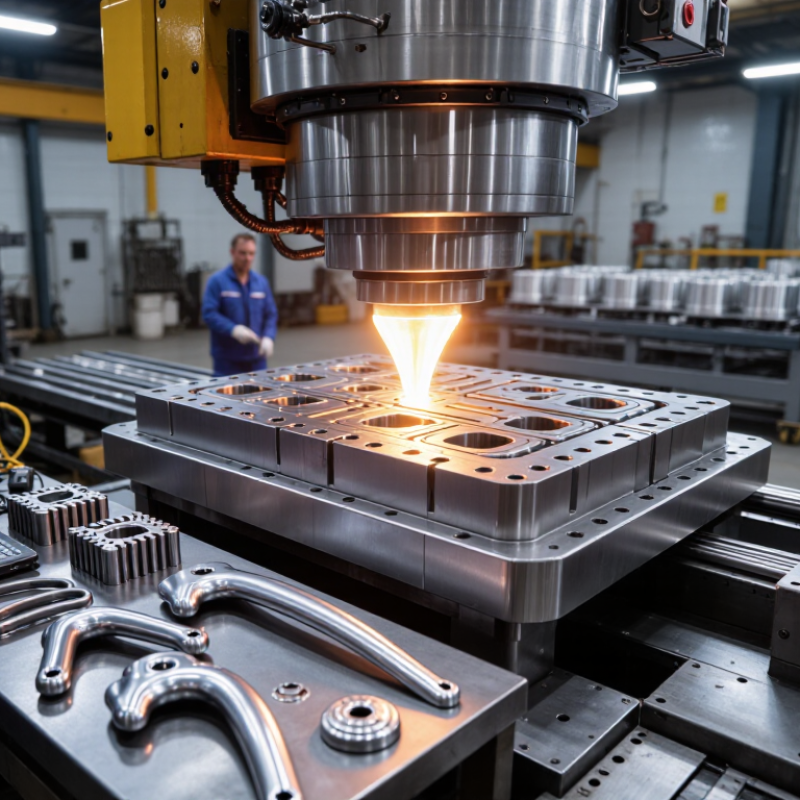
Table of Contents [Hide]
Zinc Alloy Die Casting Defined: Zamak 3, 5, and 7 Material Standards
Custom zinc alloy die casting injects molten zinc into a hardened steel die under high pressure. The process creates thin walls, ribs, threads, and textured surfaces with limited machining. USGS Mineral Commodity Summaries 2024 reported global zinc mine production near 12 million metric tons in 2023. That supply supports zinc’s broad industrial use, although recycled content and regional availability still require verification.
The subtitle matters because Zamak 3, 5, and 7 are not interchangeable. ASTM B86-23 covers zinc alloy castings and chemical requirements. Zamak 3 typically contains about 3.9% aluminum, with very low copper. It offers stable dimensions, good flow, and clean surface detail. Zamak 5 adds roughly 1% copper. Expect higher strength, but slightly reduced ductility. Zamak 7 uses lower magnesium than Zamak 3, improving fluidity for delicate sections and polished finishes. Exact limits should follow the approved material certificate.
In production, engineers check melt temperature, gate design, cooling, and porosity risk. A small venting error can leave a visible blister near a screw boss. That is easy to miss.
The wrong grade can waste tooling time. Strength data from a supplier sheet may also differ from real castings. NADCA process guidance recommends testing representative parts, not relying only on handbook values. For custom work, measure hardness, tensile behavior, coating adhesion, and dimensional change after cycling.