
-
- Products
- Indoor Household Cords
- Appliance Cords
- General Purpose Short-Length Cords
- General Purpose Extension Cords
- Landscape & Decorating Cords
- Bright Color Extension Cords
- Oil-Resistant Extension Cords
- Cold-Flex Extension Cords
- VividFlex Power Cords
- EXTREME All-Weather Cords
- Cord Management
- Task Lights
- Adapters & GFCI Devices
- Where to Buy
- About
- Careers
- Glossary
- Catalog


What Is a Cold Storage Condensing Unit and How Does It Work?
A Cold Storage Condensing Unit is the working heart behind many refrigerated rooms, warehouses, and food distribution facilities. It removes heat from the storage space and releases that heat outdoors. The process sounds simple. The details are not.
Inside the system, refrigerant leaves the evaporator as a low-pressure vapor. The compressor raises its pressure and temperature. The condenser then rejects heat through metal tubes and fins, often helped by a fan. After that, the expansion device reduces pressure before the refrigerant returns to the evaporator. The cycle repeats while the room remains below its target temperature.
Dr. Andy Pearson, a respected refrigeration engineer and former Group Engineering Director at Star Refrigeration, often explains the core principle this way: “Refrigeration is the controlled movement of heat.” That idea matters when examining a Cold Storage Condensing Unit. The unit does not create cold. It moves unwanted heat away.
A practical example helps. In a frozen-food room, warm air enters whenever a worker opens the insulated door. Moisture may also form frost on the evaporator coil. The condensing unit must handle that changing load without excessive cycling or pressure instability.
Small errors matter.
An undersized unit may run continuously. An oversized unit may short-cycle and waste energy. Poor airflow can raise discharge pressure, damage components, and shorten service life. These problems are easy to overlook during planning.
This guide explains each component, operating stage, selection factor, and maintenance concern. It also acknowledges an uncomfortable truth: field conditions rarely match design assumptions perfectly. Reliable performance requires measurement, correct commissioning, regular cleaning, and advice from qualified refrigeration professionals.
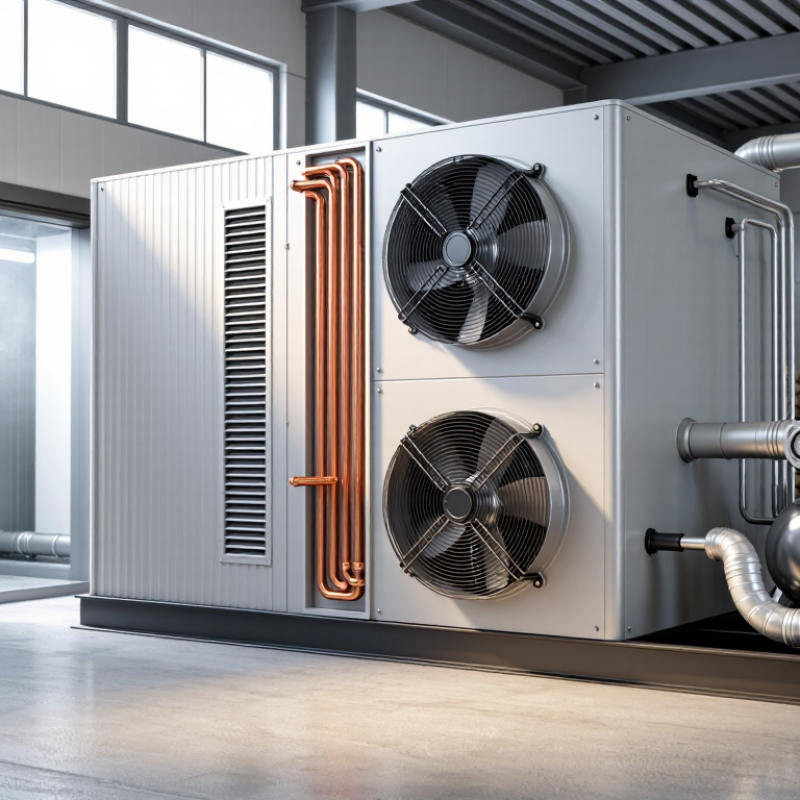
Table of Contents [Hide]
Definition and Main Components of a Cold Storage Condensing Unit
What Is a Cold Storage Condensing Unit and How Does It Work?
A cold storage condensing unit is the heat-rejection section of a refrigeration system. It removes heat from a storage room and releases it outside. The unit usually contains a compressor, condenser coil, fan, liquid receiver, filter-drier, and control devices. Together, these parts maintain the refrigerant cycle and support stable room temperatures.
The compressor draws in low-pressure vapor from the evaporator and raises its pressure. This creates hot, high-pressure gas. The condenser coil then transfers heat to surrounding air, while the fan improves airflow across the coil. After condensation, liquid refrigerant passes through the receiver and filter-drier. An expansion valve later reduces its pressure before the refrigerant returns to the evaporator. It sounds simple. In practice, the neat diagram is never the whole story. Dirty coils, restricted airflow, or incorrect refrigerant charge can reduce performance and increase energy use. A technician should confirm pressures, electrical readings, airflow, and temperature under actual operating conditions.
Tips: Keep the condenser coil clean and leave clear space around the fan outlet. Check unusual vibration, oil marks, frost patterns, or long running times early. These signs may indicate leakage, airflow problems, or control faults. Record temperature readings regularly. Small errors matter, especially when products require tight temperature control. Maintenance records also help technicians identify changes before a minor issue becomes an expensive repair.