
-
- Products
- Indoor Household Cords
- Appliance Cords
- General Purpose Short-Length Cords
- General Purpose Extension Cords
- Landscape & Decorating Cords
- Bright Color Extension Cords
- Oil-Resistant Extension Cords
- Cold-Flex Extension Cords
- VividFlex Power Cords
- EXTREME All-Weather Cords
- Cord Management
- Task Lights
- Adapters & GFCI Devices
- Where to Buy
- About
- Careers
- Glossary
- Catalog


How to Choose the Right Oil Storage Fuel Drum?
Choosing the right Oil Storage Fuel Drum is a practical safety decision, not merely a purchasing task. The drum must match the fuel type, storage volume, location, and expected handling conditions. Steel may provide strong impact resistance, while approved plastic can offer lighter handling and better corrosion resistance. Neither option is automatically suitable.
Fuel-storage engineer John D. Edwards explains, “The safest drum is matched to the fuel, the site, and the maintenance routine.” That principle deserves attention. A drum standing beside a workshop faces different risks from one stored outdoors, where sunlight, rain, and temperature changes accelerate deterioration. Check the manufacturer’s compatibility data before filling it. Small mistakes become expensive leaks.
Look for secure closures, clear labeling, reliable vents, and suitable secondary containment. The base should remain stable, dry, and protected from vehicle movement. Inspect seams, caps, handles, and surface corrosion regularly. Keep ignition sources away. Follow current local fire, environmental, and workplace requirements, because rules differ by location and fuel class.
Capacity also needs honest judgment. A larger drum may reduce refill frequency, but it can increase spill consequences and handling difficulty. A smaller drum may be easier to inspect. It may also require more frequent transfers. That trade-off is easy to overlook.
There is no perfect drum. Your operating habits matter. Review the choice after seasonal changes, equipment upgrades, or a near-miss. A careful selection process protects fuel quality, workers, property, and the surrounding environment.
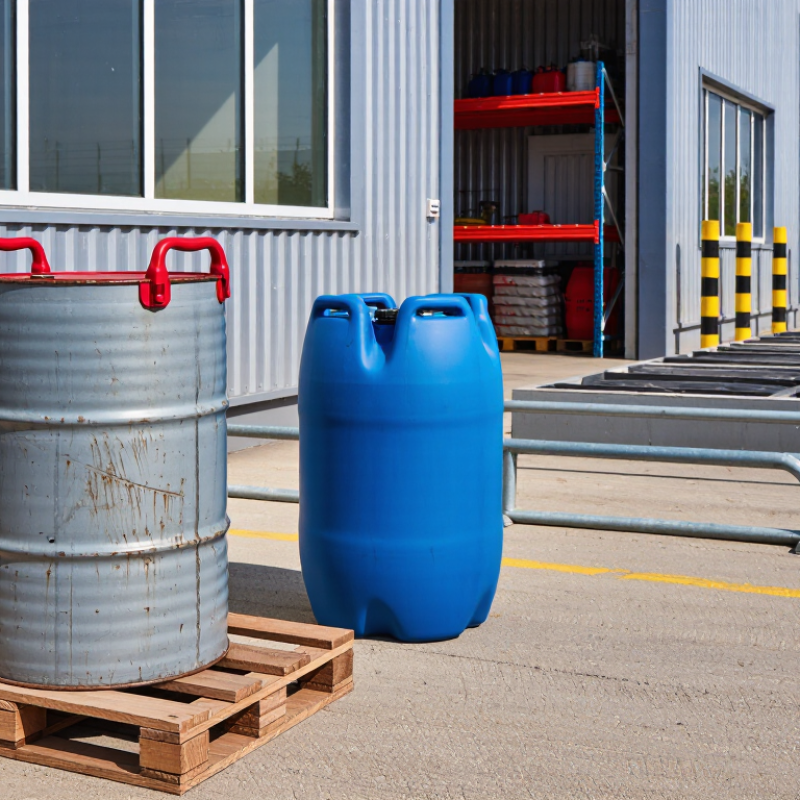
Table of Contents [Hide]
Define Your Oil Type, Volume, and Storage Requirements
How to Choose the Right Oil Storage Fuel Drum?
Define the oil before choosing a drum. Motor oil, hydraulic oil, and heating oil can require different materials and seals. Check the product safety data sheet for compatibility, viscosity, and temperature limits. A drum that suits one oil may soften, corrode, or leak with another. The label matters.
Estimate your working volume carefully. Record weekly consumption, delivery timing, and the reserve you actually need. Do not fill a drum to the rim. Leave expansion space, especially where temperatures change sharply. A rough estimate can be wrong. Measure twice. Also consider handling: a smaller drum may reduce lifting risks, while a larger one may lower replacement frequency.
Storage conditions shape the final choice. For outdoor placement, use weather-resistant construction, a secure lid, and protection from direct sunlight. For indoor storage, provide suitable ventilation and keep the drum away from heat, drains, and ignition sources. Add secondary containment sized for the stored quantity, and inspect it for cracks or standing water. Use clean, clearly marked containers to prevent cross-contamination. A practical inspection should include the bung, gasket, seams, and base. Grounding and bonding may be necessary for certain flammable liquids. Follow the safety data sheet and applicable local requirements. Even experienced operators sometimes overlook temperature change. That small oversight can create pressure, leaks, or degraded oil.