
-
- Products
- Indoor Household Cords
- Appliance Cords
- General Purpose Short-Length Cords
- General Purpose Extension Cords
- Landscape & Decorating Cords
- Bright Color Extension Cords
- Oil-Resistant Extension Cords
- Cold-Flex Extension Cords
- VividFlex Power Cords
- EXTREME All-Weather Cords
- Cord Management
- Task Lights
- Adapters & GFCI Devices
- Where to Buy
- About
- Careers
- Glossary
- Catalog


How to Choose the Right Double End Bolt in 2026?
Choosing the right Double End Bolt in 2026 requires more than matching diameter and thread size. The correct selection depends on load direction, material compatibility, thread engagement, installation access, and service temperature. A bolt used in a stainless-steel pump housing faces different risks than one installed in a structural steel frame. Small details matter. A few millimeters of insufficient engagement can weaken the joint, while excessive tightening may damage softer threads.
John Bickford, a recognized authority on bolted-joint engineering, wrote, “The bolt is only one part of the joint.” That principle remains practical today. A reliable Double End Bolt must work with the nut, washer, tapped hole, clamping surfaces, and tightening method. Engineers should review ISO or ASTM requirements, confirm the bolt grade, and request traceable material certificates from reputable suppliers. Surface coating also deserves attention, especially where moisture, chemicals, or dissimilar metals are present.
Real-world selection is rarely perfect. Product catalogs may list similar dimensions, yet thread tolerances and heat treatment can differ. This is where careful comparison helps. Measure the application, not just the old bolt. Check thread pitch with a gauge. Inspect damaged threads before installation. When uncertainty remains, consult a qualified fastener engineer and test the joint under realistic conditions. Guessing is cheaper only until failure occurs. This guide explores the essential factors behind a dependable choice, while recognizing that field conditions can expose weaknesses that specifications alone may miss.
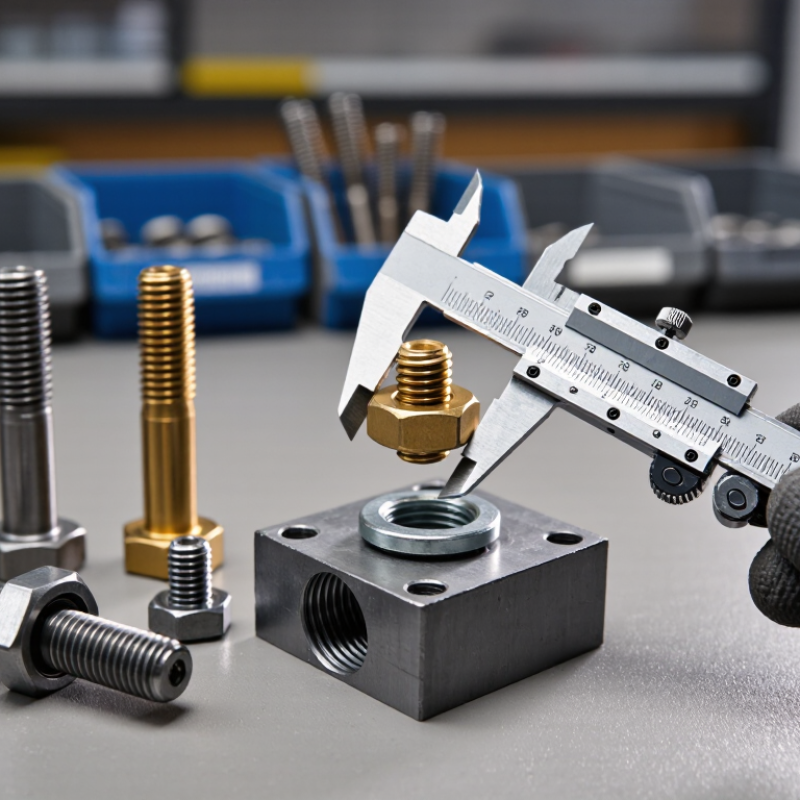
Table of Contents [Hide]
Understanding Double End Bolt Types and Their Applications
How to Choose the Right Double End Bolt in 2026?
Understanding Double End Bolt Types and Their Applications
Double end bolts, often called studs, have threads on both ends and an unthreaded center section. Their design supports repeated assembly without damaging the main housing threads. Fully threaded studs suit compact joints with limited space. Unequal-length studs work well when one side enters a blind hole and the other holds a nut. Reduced-shank types can improve alignment and reduce stress near the center.
Application matters more than appearance. Flange connections need accurate thread engagement and stable clamping force. Engine covers, pumps, gear housings, and structural machinery may require different lengths and materials. Match the bolt’s diameter, thread pitch, strength class, and corrosion resistance to the joint environment. A stainless option may resist moisture, while alloy steel may handle higher loads. Check the mating material carefully.
Small details matter.
Tips: Measure the usable thread depth before ordering. Leave enough engagement to prevent stripping, but avoid bottoming inside a blind hole. Clean both threads and inspect for burrs. Tighten with a calibrated torque tool when specifications are available. I once underestimated thread pitch because the bolt looked correct; the joint loosened after vibration. That mistake showed me why visual inspection alone is unreliable. Recheck length after adding washers, coatings, or spacers. Temperature changes and frequent maintenance may also influence the final selection.