
-
- Products
- Indoor Household Cords
- Appliance Cords
- General Purpose Short-Length Cords
- General Purpose Extension Cords
- Landscape & Decorating Cords
- Bright Color Extension Cords
- Oil-Resistant Extension Cords
- Cold-Flex Extension Cords
- VividFlex Power Cords
- EXTREME All-Weather Cords
- Cord Management
- Task Lights
- Adapters & GFCI Devices
- Where to Buy
- About
- Careers
- Glossary
- Catalog


How to Choose the Right Chemical IBC Tank?
Choosing the right Chemical IBC Tank is a safety decision, not merely a purchasing decision. These containers often hold corrosive acids, solvents, additives, and sensitive liquid ingredients. A failed valve can turn a controlled transfer into a costly spill. That detail matters.
Grand View Research estimates that the global intermediate bulk container market was valued at approximately USD 17.5 billion in 2023. Its report also projects continued growth through 2030, driven by industrial chemicals, food processing, and pharmaceutical logistics. This expansion increases product choice, but it can also encourage rushed comparisons. The cheapest tank may create higher cleaning, leakage, or disposal costs later.
A reliable selection process should begin with chemical compatibility. Review the Safety Data Sheet, concentration, temperature range, density, and storage duration. Polyethylene tanks suit many liquids, while stainless steel options may provide stronger resistance, heat tolerance, and cleaning performance. However, material names alone are not enough. Liner construction, gasket composition, valve design, and weld quality can change the outcome.
Transport requirements also deserve careful attention. The UN Recommendations on the Transport of Dangerous Goods and ISO 16103 provide important guidance for approved IBC packaging and reusable plastic IBCs. Check the tank’s UN marking, certification scope, stacking limits, filling ratio, and inspection history. Ask for traceable test records.
A spreadsheet cannot capture every hazard.
Real operating conditions matter. Forklift impact, outdoor exposure, repeated washing, and awkward discharge points may reveal weaknesses that specifications hide. Consultation with a qualified packaging engineer or chemical safety professional strengthens the decision. Some choices remain uncertain. That is precisely why every Chemical IBC Tank should be reviewed against the actual chemical, handling process, and transport route before approval.
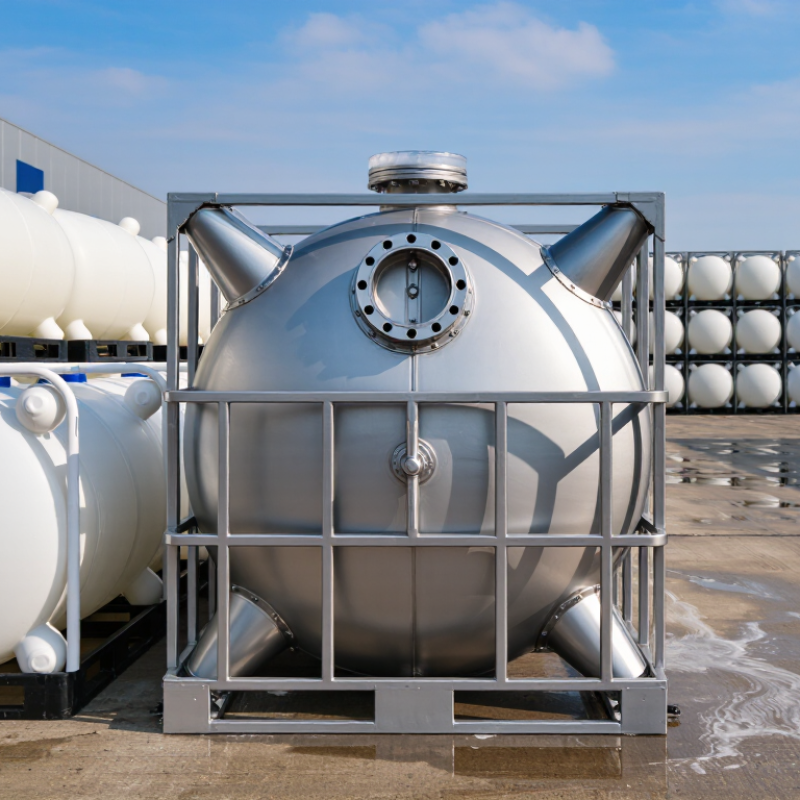
Table of Contents [Hide]
Chemical IBC Tank Basics and Their Common Applications
Choosing the right chemical IBC tank starts with the liquid, not the container price. An IBC tank usually combines a durable inner bottle, a protective metal cage, and a pallet base. High-density polyethylene is common because it resists many industrial liquids. However, resistance depends on concentration, temperature, exposure time, and additives. Always check a compatibility chart and request written confirmation from the tank supplier.
I have found that application details often reveal problems early. Water-treatment chemicals may require corrosion-resistant fittings and secure outdoor storage. Cleaning solutions need reliable valves, tight caps, and easy inspection points. Coatings and liquid additives may need controlled temperature and gentle handling to prevent separation. A tank for short-distance transfer can differ from one used for repeated filling, warehouse storage, or road transport. Small details matter.
Before selecting a tank, inspect the outlet design, gasket material, lifting points, and label area. Confirm the working capacity, not only the advertised volume. Leave expansion space when temperature changes are possible. A practical inspection should check cracks, dents, discoloration, valve damage, and unclear markings. Do not reuse a tank automatically. A container that held one chemical may react badly with another, even when it looks clean. This is where experience can be imperfect; field assumptions are not a substitute for compatibility data, safety documentation, and trained handling procedures.