
-
- Products
- Indoor Household Cords
- Appliance Cords
- General Purpose Short-Length Cords
- General Purpose Extension Cords
- Landscape & Decorating Cords
- Bright Color Extension Cords
- Oil-Resistant Extension Cords
- Cold-Flex Extension Cords
- VividFlex Power Cords
- EXTREME All-Weather Cords
- Cord Management
- Task Lights
- Adapters & GFCI Devices
- Where to Buy
- About
- Careers
- Glossary
- Catalog


How to Choose the Best Full Body Traction Device?
Choosing the right Full Body Traction Device requires more than comparing prices, straps, or promised results. Lower back pain affects an estimated 619 million people worldwide, according to the World Health Organization’s 2023 report. The same source projects that cases may reach 843 million by 2050. These figures explain the growing interest in home-based support equipment. They do not prove that traction suits everyone.
Evidence remains mixed. The WHO guideline for chronic primary low back pain advises against routine traction, while NICE guidance also does not recommend traction for low back pain with or without sciatica. These recommendations deserve attention. A device may feel relieving for one person and uncomfortable for another. Short-term comfort is not the same as clinical improvement.
This guide examines practical and safety-focused selection criteria. Adjustable force matters. So does stable body support. A useful design should keep the spine positioned comfortably, without excessive pulling or pressure around the hips, ribs, or neck. Physical therapists commonly assess posture, symptom patterns, mobility, and medical history before recommending similar interventions. That experience should influence home-device decisions.
Check the manufacturer’s instructions carefully. Look for transparent load limits, material details, cleaning guidance, and independent testing. FDA registration, when applicable, does not automatically prove effectiveness. It mainly reflects regulatory status and device information. That distinction is easy to miss.
No device is perfect. Personal fit matters. People with fractures, severe osteoporosis, recent surgery, progressive weakness, or unexplained pain should seek professional advice before use. The best Full Body Traction Device is not necessarily the strongest model. It is the one that matches documented needs, allows controlled adjustment, and supports responsible use.
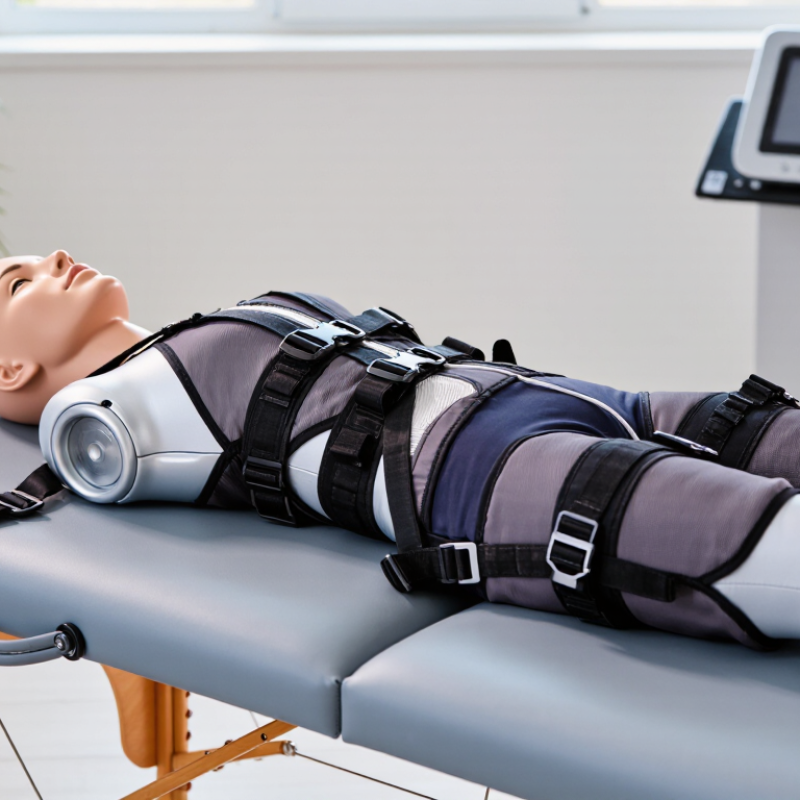
Table of Contents [Hide]
What Is a Full Body Traction Device?
A full body traction device is equipment designed to apply a gentle, controlled pulling force along the spine and related joints. It usually combines a padded platform, adjustable supports, straps, or a motorized frame. The aim is to create space between spinal segments and reduce pressure temporarily. It does not “stretch everything” at once, despite the name.
In practical use, a person may lie flat while the device supports the head, pelvis, or legs. Some models provide steady traction, while others use short release-and-pull cycles. The sensation should feel firm, not sharp. A trained physiotherapist can adjust force, duration, and body position according to the user’s symptoms and medical history. That guidance matters because back pain can come from different causes, and traction may not suit everyone.
When choosing one, inspect the frame, padding, weight limit, adjustment range, and emergency release. Look for clear instructions and evidence-based safety guidance. A device that feels impressive in a showroom may become uncomfortable after ten minutes at home. I would test the support points carefully, especially around the neck and hips. Comfort is not the only measure, but ignoring it is a mistake. People with recent injuries, fractures, osteoporosis, nerve problems, or unexplained pain should seek qualified medical advice before using traction equipment.