
-
- Products
- Indoor Household Cords
- Appliance Cords
- General Purpose Short-Length Cords
- General Purpose Extension Cords
- Landscape & Decorating Cords
- Bright Color Extension Cords
- Oil-Resistant Extension Cords
- Cold-Flex Extension Cords
- VividFlex Power Cords
- EXTREME All-Weather Cords
- Cord Management
- Task Lights
- Adapters & GFCI Devices
- Where to Buy
- About
- Careers
- Glossary
- Catalog


How to Choose a USB C Bulkhead Connector in 2026?
Choosing a Usb C Bulkhead Connector in 2026 means matching the connector to the equipment, not just its advertised speed. A port mounted through a metal panel may face vibration, dust, moisture, and repeated cable insertion. Small details matter. Check the panel thickness, cutout dimensions, mounting method, and available clearance behind the enclosure. A connector that fits the drawing may still clash with an internal board or cable bend.
Next, confirm the data and power requirements from the product documentation. USB-C describes a connector shape; it does not guarantee a particular data rate, charging level, or supported protocol. Compare the connector’s rated current, voltage, and transfer capability with the devices and cables in your system. Review sealing details too: gasket material, mating cable fit, and stated ingress protection can affect real-world performance. A rating for one component does not automatically certify the finished enclosure.
Ask suppliers for dimensional drawings, test conditions, and clear installation guidance. If the port will be exposed to frequent handling, inspect retention and strain relief rather than relying on appearance. For prototypes, test the assembled panel with the actual cable and operating environment. That takes time. Still, no checklist catches every mismatch, and product specifications can leave practical questions unanswered. A careful comparison—and a small fit test—can prevent costly redesigns later.
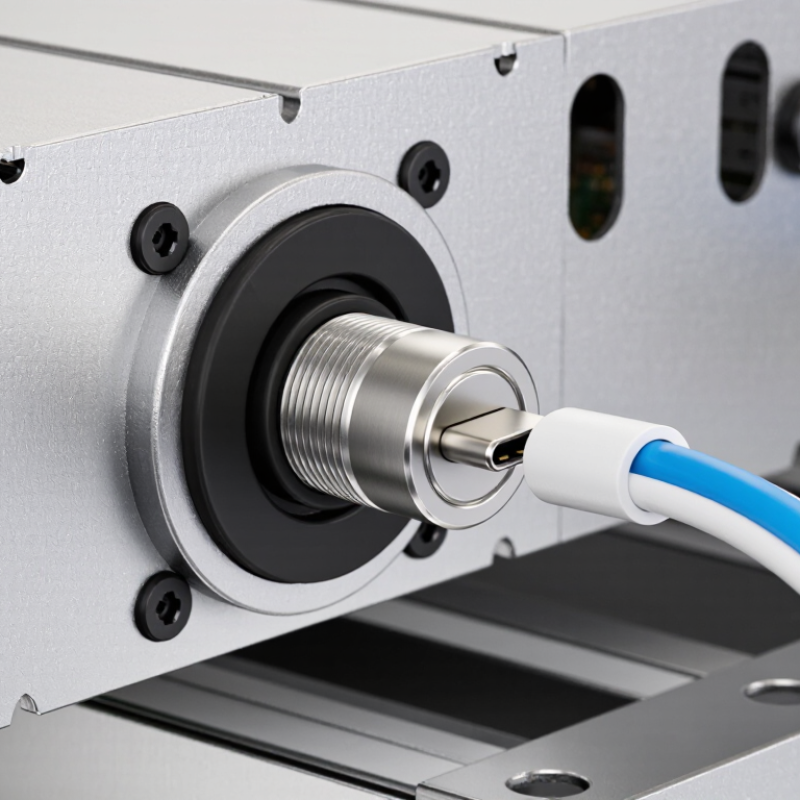
Table of Contents [Hide]
Identify the Application and Required USB-C Functions
How to Choose a USB C Bulkhead Connector in 2026?
Identify the Application and Required USB-C Functions
Start with the equipment the connector will serve. A charging port on a sealed control box has different needs from a data connection on a camera housing. Decide whether you need power only, data transfer, or video output. USB-C describes the connector shape, not every function it supports. Check the connector’s documented pin configuration and supported protocols before ordering.
Then consider the installation itself. Measure the panel thickness, available clearance behind the enclosure, and space needed for the mating cable. For outdoor or washdown environments, confirm the stated ingress protection applies to the fully assembled connection, including its cap or cable. Also check whether the connector supports your required charging level or data rate across the intended cable length. A small detail, such as a recessed port, can make frequent access awkward. It is easy to overlook.
Tips: Write down the needed functions, power level, environment, and mounting dimensions before comparing parts. Ask for a datasheet when specifications are unclear, and test a sample with your actual device and cable. The first choice may still need adjusting.