
-
- Products
- Indoor Household Cords
- Appliance Cords
- General Purpose Short-Length Cords
- General Purpose Extension Cords
- Landscape & Decorating Cords
- Bright Color Extension Cords
- Oil-Resistant Extension Cords
- Cold-Flex Extension Cords
- VividFlex Power Cords
- EXTREME All-Weather Cords
- Cord Management
- Task Lights
- Adapters & GFCI Devices
- Where to Buy
- About
- Careers
- Glossary
- Catalog


How to Choose the Best Water Leak Detector in 2026?
A leak rarely begins with a dramatic flood. It may start as a quiet drip beneath a sink, a damp patch near a washing machine, or water collecting beside a heater. By the time damage becomes visible, flooring and stored belongings may already be affected. In 2026, a Water Leak Detector can provide an early warning, but the right model depends on your home and daily routines. Placement matters.
This guide explains how to compare detector types, sensor placement, alert methods, power options, and smart-home compatibility. Some units sound an alarm at the sensor; others send phone notifications through Wi-Fi or a hub. Certain systems can also trigger an automatic shutoff valve, though installation and compatibility vary. A simple battery-powered sensor may suit an apartment, while a larger home may benefit from connected sensors in several risk areas. Check how alerts work when the internet or power is unavailable.
Specifications are useful, but they do not tell the whole story. A sensor hidden behind boxes may be less useful than an affordable model placed where leaks are likely. I would not choose by feature count alone; setup, battery replacement, and clear alerts matter in ordinary use. Smart features can help, but they can also add complexity. Details matter.
The sections ahead will help you weigh cost, reliability, coverage, and maintenance before buying. No detector prevents every leak, and no single model suits every household. Use the product’s stated limits, test the alarm as directed, and consider which small leak would be hardest to notice in your home.
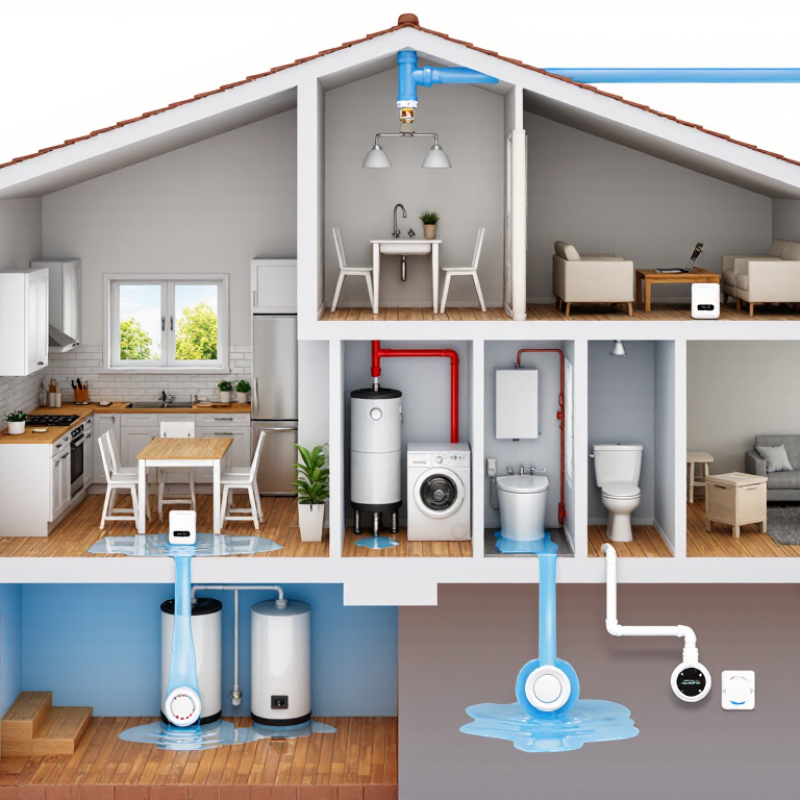
Table of Contents [Hide]
Understand Your Property’s Leak Risks and Monitoring Needs
Before choosing a water leak detector, map where water could escape and what damage might follow. Check beneath sinks, around the water heater, beside the washing machine, and near exposed pipes. A small puddle can stay hidden inside a cabinet. Pay extra attention to rooms above finished ceilings or valuable belongings.
A point sensor may suit one vulnerable spot, while a sensing cable can cover a longer path along a basement wall. Choose based on the layout, not just the number of sensors. Older plumbing, frequent travel, and a history of leaks may call for broader coverage. Still, a detector cannot prevent every kind of water damage.
Monitoring needs matter, too. If you are often away, look for alerts that reach you reliably and consider what happens during a power or internet outage. Check whether the device needs batteries, a hub, or regular testing. Useful details. Place sensors where a leak would reach them, not where they are easy to overlook. A drain pan may block water from reaching a floor sensor. That small placement mistake is easy to make, and worth checking before relying on an alert.