How to Choose the Right Power Cord Extension Cable for Your Needs?
Choosing the right power cord extension cable can be a daunting task. With so many options available, making the right choice is crucial. Industry expert John Smith, a noted electrical engineer, emphasizes, “Not all power cord extension cables are created equal.” This statement rings true in today’s market.
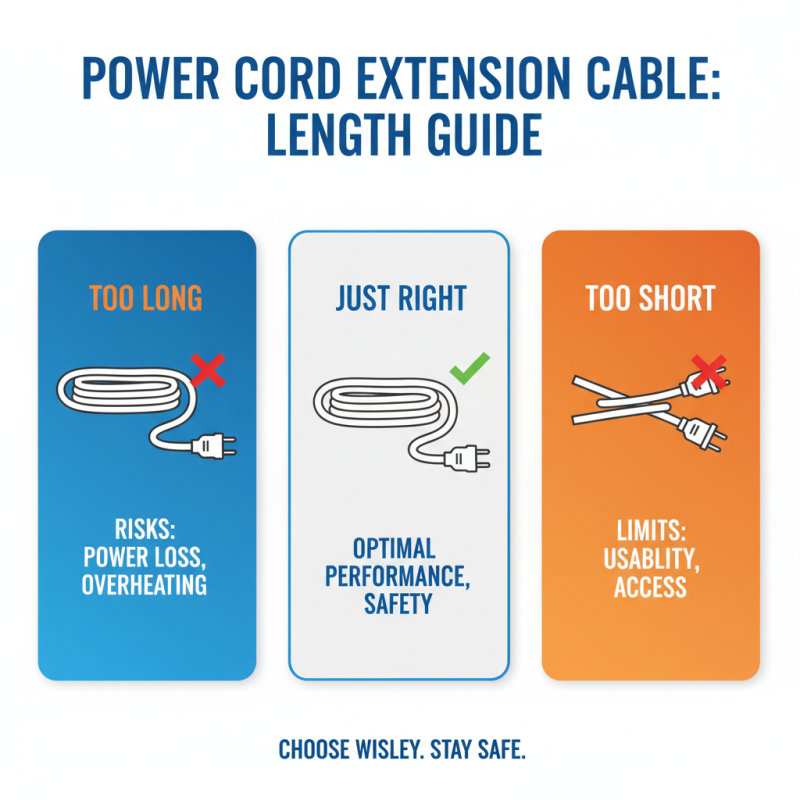
Different needs require different specifications. For example, consider the length. A longer cable may seem convenient, but it can lead to reduced efficiency. The gauge of the wire is another important factor to ponder. A thicker wire can handle more power, making it safer for heavy-duty use.
Think about the environment as well. Outdoor use requires a weather-resistant power cord extension cable. Many overlook this detail, leading to potential hazards. Ultimately, evaluating your specific needs will guide you in choosing wisely. Reflecting on these aspects is key to a safe and effective purchase.
Understanding the Different Types of Power Cord Extension Cables
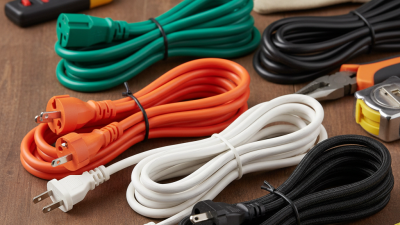
When choosing a power cord extension cable, it’s essential to understand the different types available. These cables come in various lengths and thicknesses. Choosing the right one impacts safety and performance.
There are indoor and outdoor extension cords. Indoor cables are usually lighter and flexible, designed for home use. They often feature multiple outlets, allowing you to connect multiple devices. Outdoor cables are more robust, featuring weatherproof materials. They can withstand harsh conditions, making them suitable for landscaping and outdoor events.
Moreover, you'll encounter heavy-duty and light-duty options. Heavy-duty cables can handle high wattage devices, ideal for tools and appliances. Light-duty cables serve less power-intensive equipment, like lamps. Users often overlook the gauge, which affects safety and efficiency. A thicker cable (lower gauge number) can handle more current, reducing the risk of overheating. Think carefully about your needs; taking shortcuts could lead to problems down the road.
Assessing Your Electrical Needs: Wattage and Voltage Considerations
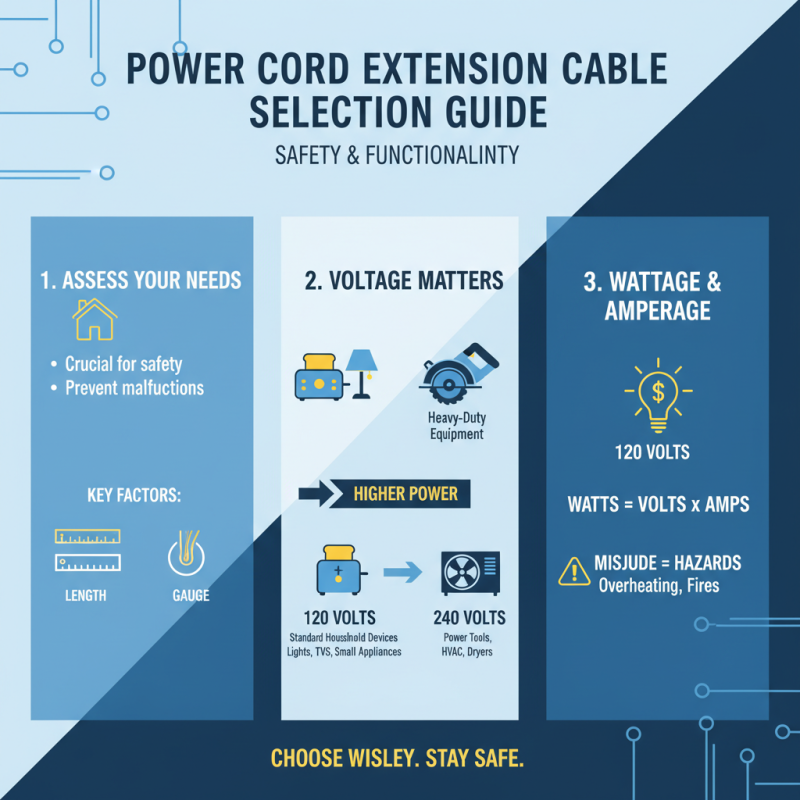
When selecting a power cord extension cable, assessing your electrical needs is crucial. The right length and gauge are vital to ensure safety and functionality. Wattage and voltage impact your choice significantly. Many household devices operate at 120 volts, while heavy-duty equipment might require 240 volts. Misjudging these can lead to malfunctions or safety hazards.
According to industry data, nearly 30% of electrical issues arise from incorrect wattage ratings. An extension cord rated for lower wattage than your device can cause overheating. For instance, a high-power appliance draws more energy. If your extension cord can’t handle this, it might pose a fire risk. Be aware of your devices' total wattage. You may need to calculate the combined wattage of multiple devices connected simultaneously. Failure to do so is common and often overlooked.
Additionally, consider the gauge of the cord. Thicker cables, like 12-gauge, can handle more current compared to thinner ones. Inadequate gauge can limit functionality, especially for high-watt devices. Look for cords with safety certifications. Many users skip this step, which can lead to unsafe usage. Understanding these factors ensures you choose the right extension cable for your needs, reducing risks and optimizing performance.
Identifying Safety Features: Surge Protection and Ratings
Choosing the right power cord extension cable is crucial for safety and functionality. Surge protection is a key feature to consider. According to the National Fire Protection Association, electrical failures cause around 30% of home fires. A surge protector helps mitigate this risk. Look for devices rated for at least 600 Joules. This rating indicates the energy absorption capacity. A cable with too low a rating is not ideal and may not provide adequate protection.
Another important factor is the cable's amperage rating. Most home devices require a specific amperage to function correctly. If a cable is underrated, it can overheat. This scenario not only risks damaging your equipment but could also pose fire hazards. Always check device requirements against the cable specifications. Sometimes, users opt for convenience over safety. It’s easy to underestimate the importance of these factors.
Also, be mindful of the length of the extension cord. Longer cords can lead to voltage drops, affecting performance. The American National Standards Institute recommends minimizing cord length where possible. It's tempting to use an extension that reaches farthest, but this may not always be safe. Reflect on your specific requirements and ensure you're using suitable products for your safety needs.
Power Cord Extension Cable Safety Features Comparison
This chart illustrates a comparison of safety features for power cord extension cables, including ratings for surge protection, voltage ratings, total cable length, and compatibility. The values represent a hypothetical rating out of 100 based on common quality features found in market products.
Choosing the Right Material: PVC vs. Rubber Insulation Options
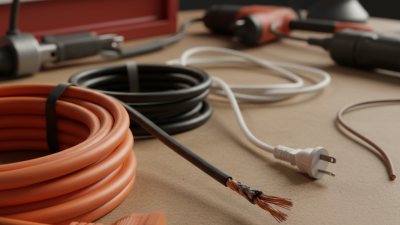
When selecting a power cord extension cable, one critical factor is the material insulation. PVC and rubber are the most common options. PVC is a cost-effective choice. It's durable, lightweight, and resists moisture. However, it may not perform well in extreme temperatures. In colder climates, PVC can become brittle. This could lead to cracks over time.
Rubber insulation, on the other hand, offers flexibility and resilience. It withstands extreme temperature variations. This makes it suitable for outdoor use. Rubber is also more resistant to wear and tear. Yet, it is generally pricier than PVC. If budget is tight, this may be a downside.
Consider the environment where the cord will be used. If it's for indoor, light-duty applications, PVC might suffice. For heavier, outdoor tasks, opt for rubber. Always weigh your options. Every choice has its pros and cons. Reflecting on your specific needs can lead to better decisions.