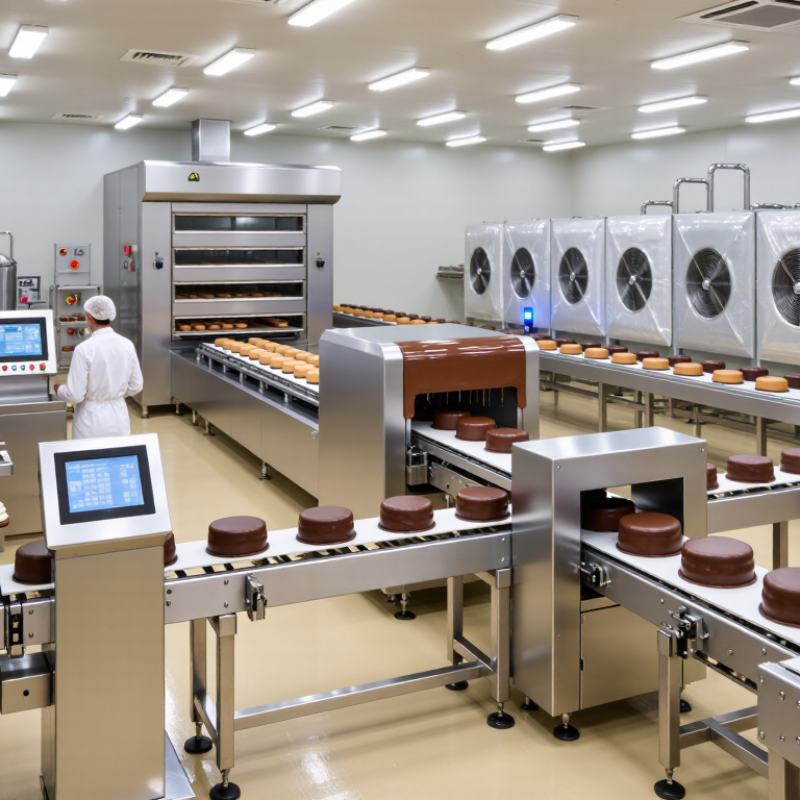
| Production Capacity | Approximately 1,000–10,000 pieces per hour, depending on cake size, filling quantity, and line configuration. | Clearly defined output based on a specified product recipe, piece weight, and operating speed. | Request a factory acceptance test using the buyer’s actual product formula and target piece weight. |
| Product Size and Weight | Common small snack-cake formats are generally produced within a broad range of approximately 20–80 g per piece. | Adjustable depositing, sandwiching, cutting, and coating systems that match the required product dimensions. | Check sample products, dimensional tolerance, weight deviation, and changeover procedure. |
| Process Configuration | A complete line may include batter preparation, depositing, baking, cooling, cream filling, chocolate coating, cooling, and packaging. | A process flow diagram, equipment list, utility requirements, and clearly stated scope of supply. | Compare the proposed line layout with the actual recipe and confirm which operations are manual or automatic. |
| Baking System | Industrial cake baking commonly uses controlled tunnel-oven zones, with temperature settings selected according to batter composition and product thickness. | Independent temperature control by zone, stable conveyor speed, insulation, exhaust control, and accessible maintenance points. | Review temperature uniformity records and test the cake’s moisture, color, texture, and internal doneness. |
| Cooling System | Cooling time varies with cake thickness, recipe, ambient conditions, and the required filling or coating temperature. | A hygienic cooling conveyor with controlled airflow and sufficient residence time before filling and chocolate coating. | Confirm that the product reaches the required core temperature without excessive drying or deformation. |
| Filling Accuracy | Typical cream or filling quantity is determined by product design and is often controlled through a metering pump or depositing system. | Stable filling pressure, adjustable dosing, easy cleaning, and protection against air pockets or uneven distribution. | Measure filling-weight variation across multiple production batches and inspect the sandwich alignment. |
| Chocolate Coating | Coating systems generally include a chocolate tank, circulation or tempering function, enrobing curtain, vibration section, and cooling tunnel. | Accurate chocolate-temperature control, adjustable coating thickness, stable circulation, and cleanable food-contact surfaces. | Test coating weight, surface appearance, adhesion, setting time, and product temperature after cooling. |
| Packaging Compatibility | Common options include individual film wrapping, flow wrapping, tray packing, carton packing, or combinations of these systems. | Packaging equipment matched to product dimensions, film type, sealing requirements, production speed, and date-coding needs. | Run the intended packaging material and verify seal strength, seal integrity, alignment, and package appearance. |
| Food-Contact Materials | Stainless steel is widely used for food-contact parts because it is durable, cleanable, and resistant to corrosion. | Material specifications, food-contact declarations, hygienic welds, accessible surfaces, and documented component information. | Inspect material certificates, weld quality, surface finish, and cleaning accessibility before purchase. |
| Electrical and Control System | Modern lines commonly use PLC-based control, touchscreen operation, variable-frequency drives, sensors, and safety interlocks. | Electrical drawings, control logic, alarm records, recipe storage, multilingual interface options, and backup procedures. | Test emergency stops, guards, alarms, sensor functions, data backup, and operator access levels. |
| Energy and Utility Requirements | Utilities may include electricity, compressed air, water, ventilation, refrigeration, and gas or electric heating, depending on the design. | A complete utility consumption estimate based on rated production capacity and operating conditions. | Compare connected load with actual consumption data from a production test and confirm factory utility availability. |
| Hygiene and Cleaning | Food machinery should minimize product-contact dead zones and allow routine cleaning, inspection, and sanitation. | Tool-free or quick-release components where practical, drainage provisions, cleaning instructions, and sanitation schedules. | Perform a cleaning demonstration and inspect conveyors, pumps, nozzles, tanks, corners, and product-contact areas. |
| Safety Compliance | Industrial machinery should incorporate guarding, emergency stops, electrical protection, and risk-reduction measures appropriate to the installation. | A documented risk assessment, safety circuit description, guarding design, and compliance documentation for the destination market. | Review technical files, safety test records, manuals, and conformity documents before shipment. |
| Installation and Commissioning | Complex food-production lines normally require professional installation, alignment, calibration, and operator training. | Detailed installation drawings, commissioning procedures, training plans, and clearly defined customer responsibilities. | Include installation milestones, acceptance criteria, travel costs, and commissioning duration in the contract. |
| Spare Parts Availability | Wear parts may include belts, seals, heaters, sensors, pumps, cutting components, and electrical control parts. | A recommended spare-parts list, part numbers, lead times, prices, and an after-sales contact channel. | Confirm availability of critical parts and request a minimum spare-parts package for initial operation. |
| Warranty and Technical Support | Warranty terms vary by supplier and should specify coverage, exclusions, response time, and service method. | Written warranty conditions, remote troubleshooting, software support, service response targets, and optional maintenance plans. | Evaluate the service agreement separately from the equipment quotation and obtain support escalation contacts. |
| Factory Testing and Acceptance | Factory acceptance testing helps verify capacity, product quality, controls, safety functions, and packaging performance before shipment. | A documented FAT protocol with measurable pass/fail criteria and test records. | Use approved samples, recipes, packaging materials, and inspection checklists during the acceptance test. |
| Documentation Quality | Complete documentation should cover operation, maintenance, electrical systems, spare parts, safety, and cleaning. | English manuals, as-built drawings, wiring diagrams, software backups, maintenance schedules, and component lists. | Make delivery of complete documentation a contractual requirement before final payment. |
| Total Cost of Ownership | Purchase price is only one part of the cost; energy, labor, waste, maintenance, spare parts, and downtime also affect long-term value. | A transparent quotation that separates equipment, installation, training, packaging integration, utilities, shipping, and optional items. | Compare five-year operating costs rather than evaluating suppliers only by initial purchase price. |
| Supplier Reliability | Reliable project delivery depends on engineering capability, production resources, quality control, and documented after-sales processes. | References for comparable projects, project schedule, quality-control procedures, and evidence of successful commissioning. | Visit the manufacturing site when possible and speak with previous customers about uptime and service performance. |
| Overall Selection Recommendation | Best Value: Verified Performance | Select the manufacturer that can demonstrate stable product quality, transparent specifications, hygienic design, effective support, and measurable acceptance results. | Use a weighted scorecard covering capacity, quality, safety, service, delivery, operating cost, and total project risk. |