-
- Products
- Indoor Household Cords
- Appliance Cords
- General Purpose Short-Length Cords
- General Purpose Extension Cords
- Landscape & Decorating Cords
- Bright Color Extension Cords
- Oil-Resistant Extension Cords
- Cold-Flex Extension Cords
- VividFlex Power Cords
- EXTREME All-Weather Cords
- Cord Management
- Task Lights
- Adapters & GFCI Devices
- Where to Buy
- About
- Careers
- Glossary
- Catalog


What Is the Best Industrial Laser Cutter in China?
Choosing the best Industrial Laser Cutter in China is not simply a matter of comparing prices. A reliable machine must match your materials, production volume, cutting thickness, and workshop conditions. Stainless steel, carbon steel, aluminum, acrylic, and wood each demand different laser power and settings. The right choice starts with your actual workload.
In practical evaluations, I would inspect the laser source, cutting head, motion system, control software, and cooling unit. These components affect accuracy, speed, maintenance, and operating costs. A clean test cut matters more than a polished showroom demonstration. Ask suppliers to cut your own samples, such as a 6-millimeter steel plate with small holes and sharp corners. Watch the edge quality. Check the underside for slag.
Certifications and factory experience also deserve close attention. However, certificates alone cannot prove long-term reliability. Request service records, warranty terms, spare-part availability, and training details. A responsive engineer may save more money than a slightly cheaper machine. This is often overlooked. Some buyers focus heavily on initial price and regret the decision after installation. I would also compare real energy use, software usability, and delivery support. No single model suits every factory. The “best” Industrial Laser Cutter depends on measurable needs, verified performance, and honest supplier communication. Even experienced buyers can misjudge future production changes. Leave room for testing, inspection, and revision before signing a purchase agreement.
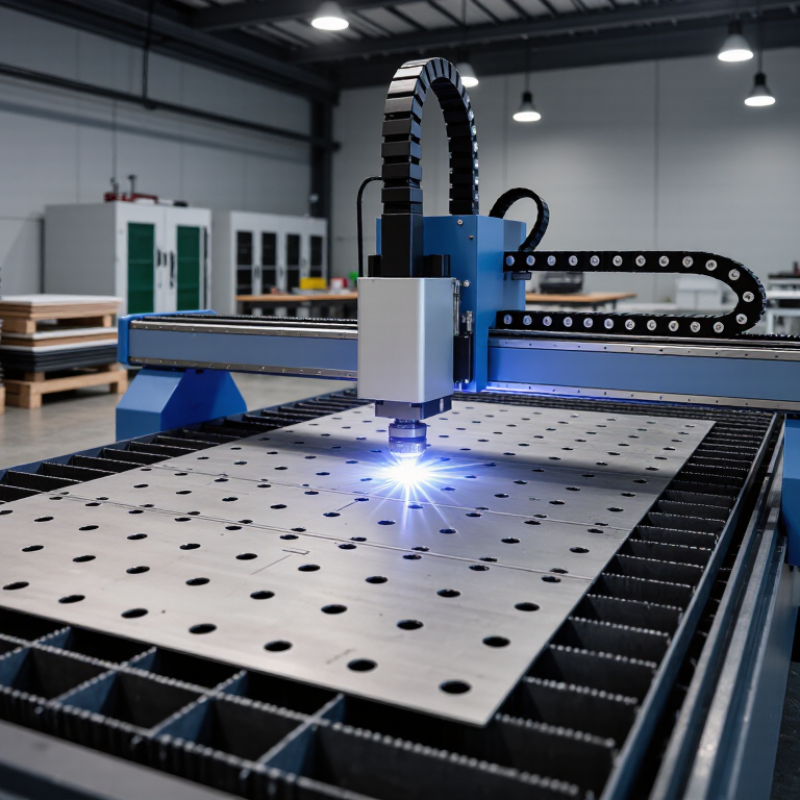
Table of Contents [Hide]
What Is an Industrial Laser Cutter?
An industrial laser cutter is a computer-controlled machine that uses a concentrated light beam to cut, mark, or engrave materials.
The beam melts, burns, or vaporizes a narrow path. Assist gas then clears the cutting area. Common gases include oxygen, nitrogen, and compressed air.
Unlike a small workshop cutter, an industrial model usually has a rigid frame, powerful laser source, automatic height control, and a large worktable. It may process steel, aluminum, copper, stainless steel, plastics, and other approved materials. In factory use, cutting speed is only one concern. Beam quality, edge smoothness, positioning accuracy, maintenance access, and operator safety matter just as much. From practical machine checks, I have found that stable motion often produces better results than impressive power ratings. More power is not always better. That point is easy to forget.
Tips: Check the material thickness, daily workload, and expected edge quality before choosing equipment. Ask for sample cuts using your own drawings and materials. Inspect the kerf, corners, dross, and heat marks. Confirm that the machine includes proper guarding, ventilation, emergency controls, and clear maintenance procedures. A reliable supplier should explain operating limits honestly. If every result looks perfect in a demonstration, question the conditions. Production floors are rarely so kind.