Top 10 Best Extension Cord Cables for Every Home and Office Use?
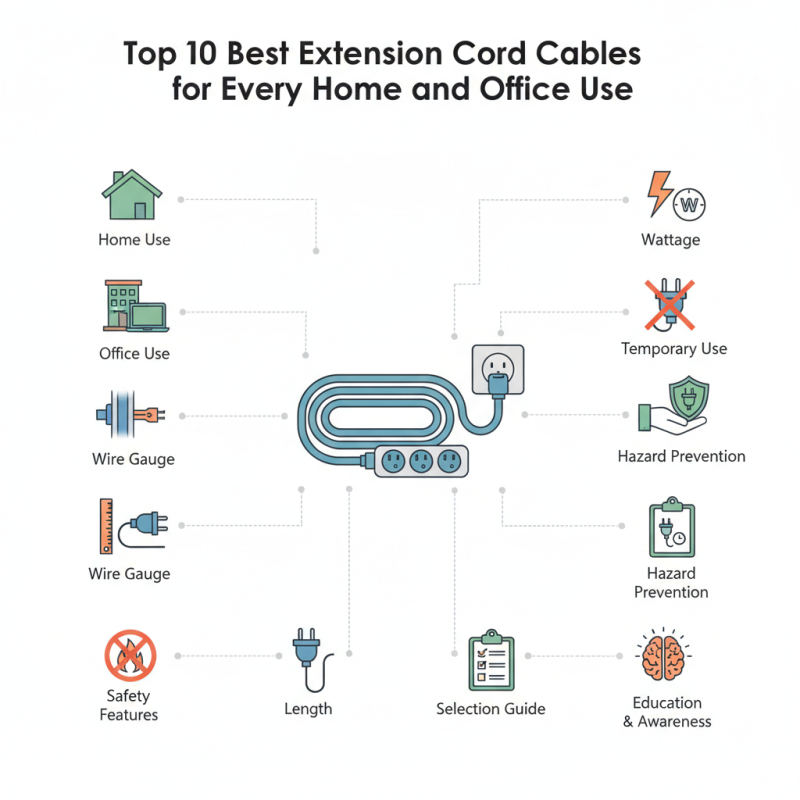
In today's fast-paced world, having the right extension cord cable is essential for both homes and offices. According to a report by the National Electrical Manufacturers Association, improper use of extension cords leads to thousands of injuries and property damage annually. The extension cord cable industry has seen a surge in demand, driven by the growing number of devices we rely on.
Expert John Richards, a leading figure in electrical safety, emphasizes, "The right extension cord cable not only increases convenience but significantly reduces hazards." Understanding the right specifications and safety features is crucial for consumers. Many still overlook the importance of choosing the correct gauge and length for their needs.
Further complicating matters, some users tend to use extension cords as permanent solutions. This practice can lead to serious risks, including overheating and fire hazards. Awareness and education about proper use are lacking. Selecting the best extension cord cable requires thoughtful consideration of various factors, such as wattage and application, that many simply ignore. Ensuring safety while meeting our power needs is a challenge worth addressing.
Understanding Extension Cords: Types and Features Explained
Extension cords provide essential flexibility for powering devices in homes and offices. Understanding the types of extension cords is crucial. There are several types, including light-duty, medium-duty, and heavy-duty cords. Light-duty cords are suitable for household devices, while heavy-duty cords can handle high power, often up to 15 amps. Each type has specific uses that cater to different energy requirements.
The features of extension cords are equally important. Cords come in varying lengths, usually ranging from 6 to 100 feet. A longer cord might seem convenient, but it can also lead to energy loss. According to the National Electrical Manufacturers Association (NEMA), voltage drop becomes significant after 50 feet. Safety features also vary, with some cords offering overload protection and grounding. These features help prevent electrical hazards.
One common issue is using the wrong extension cord for your needs. Many people may underestimate the power of their devices. A common mistake is connecting high-wattage tools to light-duty cords, which can cause overheating. This oversight can lead to circuit damage or even fires. Being aware of these risks is essential for safe and efficient power management.
Factors to Consider When Choosing an Extension Cord for Your Needs
Choosing the right extension cord can be tricky. It's not just about picking any cord; safety is a priority. Look at the gauge of the wire. A lower gauge means a thicker cord. Thicker cords can handle more power. This is crucial for high-drain devices.
Consider the length of the cord needed. Longer cords can be convenient, but they often reduce power efficiency. Exposure to outdoor elements can damage indoor-rated cords. If you're using it outside, make sure it’s rated for that purpose.
Evaluate the number of outlets. More outlets can be useful but lead to overloading if you're not careful. Think about surge protection as well. It can save your devices from unexpected spikes. You may feel tempted to skip it, but it's worth considering. Test out different cords to see what suits your needs best. Every home or office has unique power requirements.
Top-Rated Extension Cords for Home and Office Applications
When it comes to selecting extension cords for home or office use, practicality is key. Extension cords come in various lengths and gauges. A longer cord allows flexibility in placement. If you have multiple devices, look for options with several outlets. This helps reduce clutter on your desk.
Safety is a top priority. Opt for cords with built-in surge protectors. Overloading can cause hazards. Some cords also feature light indicators. These show when the cord is powered on. Remember that outdoor cords require additional weatherproofing. You don’t want a rainy day to ruin your setup.
Consider the cord material as well. Some cables are more durable than others, especially for heavy use. Keep in mind that not all cords are created equal. Occasionally, you may encounter fraying or poor connections. Don’t overlook these details when making your choice. Paying attention to these factors ensures your workspace remains functional and safe.
Top 10 Best Extension Cord Cables for Every Home and Office Use
| Extension Cord Type |
Length |
Maximum Load |
Number of Outlets |
Safety Features |
Price Range |
| Indoor |
6 ft |
15 Amps |
3 |
Surge Protection |
$10 - $15 |
| Outdoor |
25 ft |
15 Amps |
5 |
Water Resistant |
$20 - $30 |
| Heavy-Duty |
50 ft |
20 Amps |
6 |
Surge Protection, Ground Fault |
$30 - $50 |
| Flat Extension |
15 ft |
15 Amps |
3 |
Safe-T-Twist Lock |
$15 - $20 |
| Smart Extension |
10 ft |
15 Amps |
4 |
App Control |
$25 - $35 |
| Multi-Outlet |
12 ft |
15 Amps |
10 |
Surge Protection |
$15 - $25 |
| Coiled Extension |
20 ft |
15 Amps |
3 |
Compact Design |
$18 - $28 |
| Extension Cord Reel |
100 ft |
15 Amps |
4 |
Auto-Rewind |
$50 - $70 |
| Surge Protector Extension |
8 ft |
15 Amps |
6 |
Surge Protection, Indicator Light |
$20 - $30 |
| USB Extension |
10 ft |
15 Amps |
3 |
USB Charging Ports |
$15 - $25 |
Safety Tips for Using Extension Cords Effectively
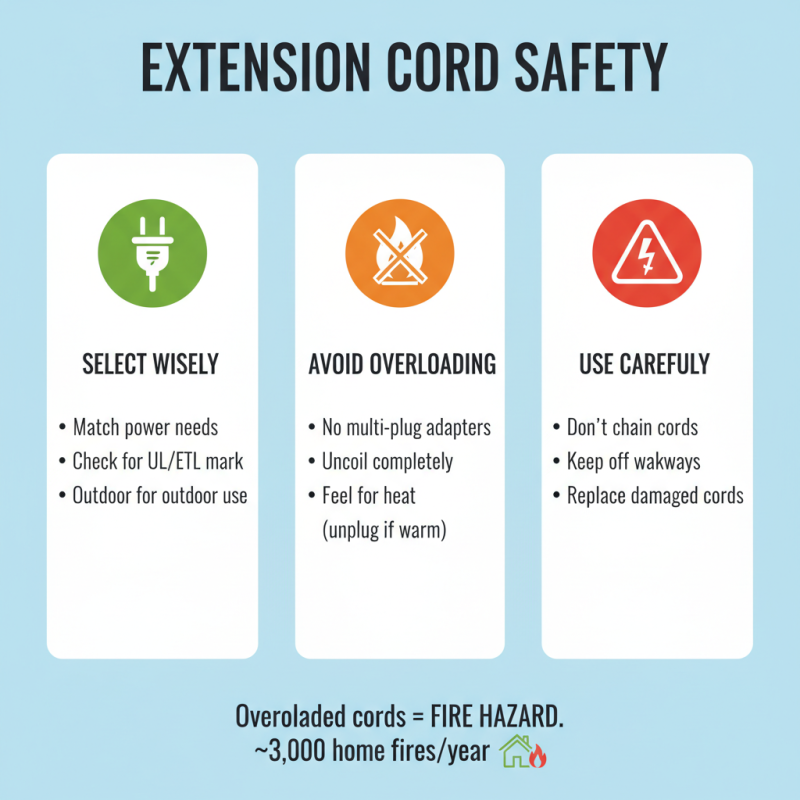
Using extension cords effectively requires attention to safety. Overloaded extension cords can lead to overheating, which may cause fires. A report by the National Fire Protection Association states that nearly 3,000 home fires each year are linked to extension cords. This highlights the need for careful selection and usage.
Always check the cord's rating before plugging in devices. Use cords designed to handle the total wattage of appliances. Avoid running cords under rugs or furniture, as this can trap heat. Instead, ensure they are visible and can cool down if necessary. It's crucial to avoid daisy-chaining multiple cords together. Such practices increase risks significantly, according to safety experts.
Remember to inspect cords regularly for damage. Frayed wires are a serious hazard that should not be ignored. Replace any damaged cord immediately. Keep cords away from wet areas. Water and electricity do not mix well. Following these tips can enhance safety while allowing you to power multiple devices effectively.
Maintaining and Storing Extension Cords for Longevity
Proper maintenance and storage of extension cords can significantly enhance their longevity. According to the National Fire Protection Association, improper use and storage of extension cords contribute to nearly 3,000 residential fires annually. This statistic highlights the importance of safe handling practices. Cords should be regularly inspected for frays, kinks, and exposed wiring. These wear and tear points can lead to dangerous situations. If a cord shows signs of damage, it's better to replace it rather than risk a potential hazard.
When it comes to storage, coiling the cords loosely is essential. Tight coils can create pressure points that damage the wire inside. Use a designated storage box or a cable organizer to keep them untangled and ready for use. Storing extension cords in humid areas can also lead to corrosion, so a dry, cool place is ideal. Research from the Electrical Safety Foundation International indicates that storing cords improperly can reduce their lifespan by up to 50%. This is often overlooked, yet it is crucial for ensuring safety and usability.