| Foam Material | Flexible molded polyurethane foam, commonly produced with polyol, isocyanate, water, catalysts, surfactants, and additives. | The formulation is selected according to the required seat softness, support, resilience, durability, and fire-performance requirements. | Raw materials should be controlled by batch, storage temperature, shelf life, and supplier certificates before production. |
| Typical Foam Density | Approximately 25–60 kg/m³ for many sofa seat and back cushion applications. | Density is adjusted through formulation and process control rather than by simply compressing the finished foam. | Density affects weight, firmness, durability, cost, and load-bearing performance. The target should be confirmed with a tolerance before tooling. |
| Hardness and Firmness | Usually specified by indentation force deflection or a comparable compression-force method; the selected value depends on seat comfort and support. | Hardness is influenced by foam chemistry, density, mold temperature, cream time, rise profile, and curing conditions. | Samples from the center and edges should be tested because molded cushions can show local firmness variation. |
| Cushion Geometry | Common features include crown height, taper, radiused corners, side bolsters, lumbar contours, and locating recesses. | Designers create a 3D cushion model, add draft and radius transitions, then convert it into a moldable cavity. | Sharp internal corners should be avoided because they can restrict foam flow and create stress concentrations or visible surface defects. |
| Dimensional Allowance | Final dimensions vary with foam formulation, mold design, demolding time, post-cure shrinkage, and upholstery compression. | Tool dimensions are compensated using trial results and controlled reference samples instead of relying on nominal CAD dimensions alone. | Critical dimensions should be identified on the drawing, with measurable tolerances for length, width, thickness, angle, and mounting features. |
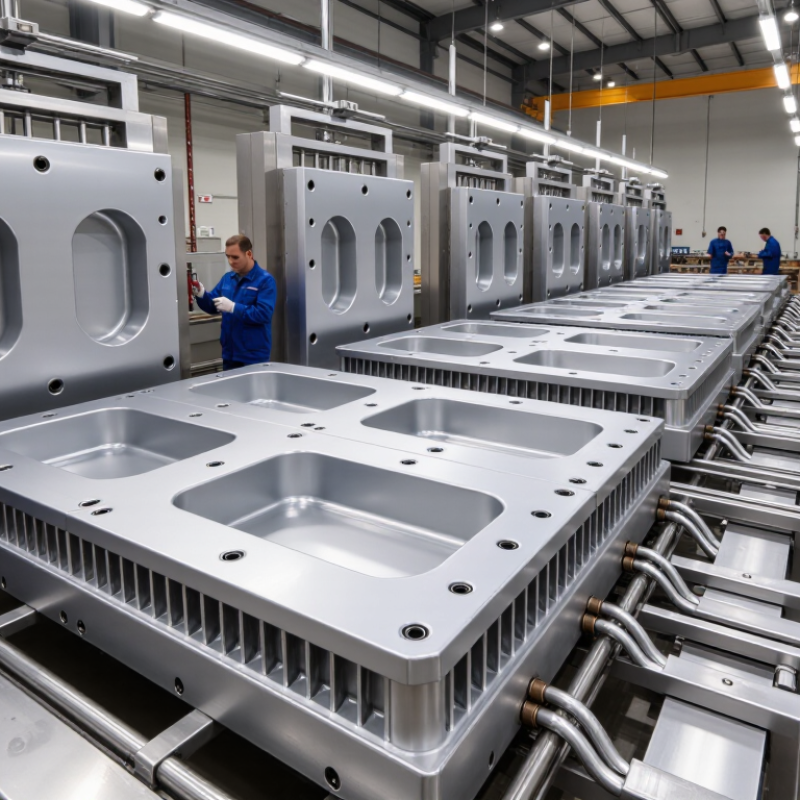
| Mold Construction | Production molds are commonly made from aluminum or other heat-conductive tooling materials; prototype tools may use lower-cost alternatives. | The mold is machined or cast from the approved 3D model and fitted with hinges, clamps, vents, inserts, and release features as required. | Tool rigidity, surface finish, thermal uniformity, vent layout, and ease of cleaning strongly influence repeatability and appearance. |
| Mold Surface and Finish | Surface texture may be smooth, textured, or designed to reproduce a specified visual effect beneath the upholstery cover. | The cavity surface is finished according to the required appearance and may include polished areas, controlled texture, or removable inserts. | Surface defects in the mold can transfer to the foam. The approved master sample should be retained for visual comparison. |
| Parting Line and Draft | The parting line is positioned where it is least visible and least likely to interfere with upholstery or assembly. | Draft angles and flexible mold features help the cured cushion release without tearing or excessive deformation. | Parting-line flash should be minimized and trimmed consistently. Excessive draft can change the finished cushion profile. |
| Ventilation | Small vents or venting channels allow displaced air and reaction gases to leave the cavity during filling and expansion. | Vent locations are selected near potential air traps, high points, deep contours, and closed-end sections of the mold. | Blocked or insufficient vents may cause voids, sink marks, incomplete filling, surface pinholes, or uneven density. |
| Release System | Release agents may be used when compatible with the foam chemistry and the required surface or bonding process. | The agent is applied as a controlled, thin film, while the mold is cleaned and conditioned at defined intervals. | Excess release agent can create surface contamination, odor, adhesion problems, or inconsistent appearance. |
| Foam Injection and Filling | Component temperatures and mixing conditions are controlled to achieve consistent cream, rise, and gel behavior. | The mixed liquid system is dispensed into the mold, which is then closed to allow the foam to expand and fill the cavity. | Pour position, shot weight, mixing ratio, timing, and mold closure must be recorded because each affects fill quality and part weight. |
| Mold Temperature | Many molded flexible foam processes operate with heated tooling, often within a controlled range selected for the specific formulation. | Heating channels, water circulation, or other thermal systems maintain a stable mold temperature during production. | Temperature uniformity is more important than a single nominal value; cold spots can produce uneven cure, density, or surface quality. |
| Curing and Demolding | The cushion remains in the mold until it has sufficient structural stability for safe removal; the exact time depends on the formulation and geometry. | After demolding, the part is allowed to cool and stabilize before trimming, inspection, packing, or upholstery. | Premature demolding can cause deformation, sticking, surface damage, or dimensional instability. |
| Post-Cure Stabilization | Flexible polyurethane foam can continue to change slightly in dimension and physical properties after demolding. | Parts are stored under controlled conditions for a defined stabilization period before final approval or cover fitting. | Testing should use samples that have completed the specified conditioning period to make results comparable. |
| Trimming and Finishing | Typical finishing operations include flash removal, gate trimming, edge correction, surface cleaning, and identification marking. | Manual or automated trimming follows controlled reference points to preserve the designed contour and assembly interfaces. | Over-trimming can reduce support and create fit problems, while under-trimming may affect upholstery appearance. |
| Dimensional Inspection | Inspection may cover overall length, width, thickness, contour height, symmetry, mounting locations, and weight. | Calipers, templates, gauges, measuring arms, or 3D scanning can be used depending on the required accuracy and production volume. | Measurements should be taken at consistent locations with the same conditioning, orientation, and compression method. |
| Physical Property Testing | Common checks include density, indentation force deflection, compression set, tensile strength, elongation, and tear strength. | Test methods are selected according to the customer specification and applicable international or regional standards. | Results should be linked to production lots and test specimens. A single test value should not replace a defined acceptance range. |
| Durability Evaluation | Seat cushions may be evaluated by repeated loading, fatigue, compression, or cyclic durability testing. | The test applies controlled loads or repeated deflection to simulate long-term seating use. | Acceptance criteria should define allowable height loss, firmness change, cracking, permanent deformation, and visual damage. |
| Fire Performance | Fire behavior depends on the foam formulation, cover fabric, barrier materials, and the test method required for the target market. | Flame-retardant chemistry or composite construction may be used only when compatible with comfort, emissions, durability, and regulatory requirements. | Compliance must be verified using the complete finished upholstery assembly where the applicable regulation requires it. |
| Odor and Emissions | Odor and volatile organic compound performance depend on raw materials, catalysts, additives, curing, storage, and ventilation. | Formulation control, adequate curing, clean tooling, and appropriate storage help reduce unwanted odor and emissions. | Testing should follow the specified method and environmental conditions rather than relying only on subjective smell checks. |
| Upholstery Compatibility | The foam profile must match the cover pattern, seam allowance, zipper position, attachment method, and expected compression. | Prototype cushions are fitted with the intended cover to confirm appearance, wrinkles, pressure points, and installation effort. | Foam and fabric should be assessed together because a geometrically correct foam part may still produce an unsuitable covered cushion. |
| Production Documentation | Important records include approved drawings, material specifications, process parameters, inspection reports, mold maintenance records, and lot traceability. | Manufacturing instructions define the approved formulation, shot weight, mold temperature, cure time, trimming points, and inspection plan. | Document control reduces variation between production runs and supports corrective action when a defect is found. |