
-
- Products
- Indoor Household Cords
- Appliance Cords
- General Purpose Short-Length Cords
- General Purpose Extension Cords
- Landscape & Decorating Cords
- Bright Color Extension Cords
- Oil-Resistant Extension Cords
- Cold-Flex Extension Cords
- VividFlex Power Cords
- EXTREME All-Weather Cords
- Cord Management
- Task Lights
- Adapters & GFCI Devices
- Where to Buy
- About
- Careers
- Glossary
- Catalog


2026 Top Battery Cooler Suppliers for Global Buyers
Choosing a Battery Cooler supplier is a thermal-management decision, not just a purchasing exercise. Battery packs face changing loads, ambient temperatures, and charging demands. A cooler must help control cell temperatures without creating new problems in weight, energy use, service access, or integration. Small details matter: hose routing, connector placement, coolant flow, and temperature differences across the pack. A polished catalog does not prove performance.
Penn State battery researcher Chao-Yang Wang described the charging challenge this way: “We have demonstrated that we can charge an electric vehicle in 10 minutes for a 200-mile range.” His work highlights why heat management matters as batteries are pushed to perform. It does not, by itself, endorse any particular cooler or supplier. That distinction matters. For global buyers, this guide compares suppliers through practical questions: What temperature range can their systems maintain? How do they test reliability? Can they provide clear technical documentation and support for integration? Ask for evidence, not only claims.
Price can mislead. So can a long feature list. Real systems are messier. A supplier may excel at custom engineering but offer limited regional service; another may deliver quickly but provide less design flexibility. Buyers should weigh cooling performance, manufacturing capacity, communication, and after-sales support against their own operating conditions. No supplier is best for every project. The comparisons ahead are a starting point, not a substitute for technical validation. Examine test methods, request relevant data, and confirm that the proposed Battery Cooler fits the pack, duty cycle, and maintenance plan. A careful shortlist is useful; an untested assumption is not.
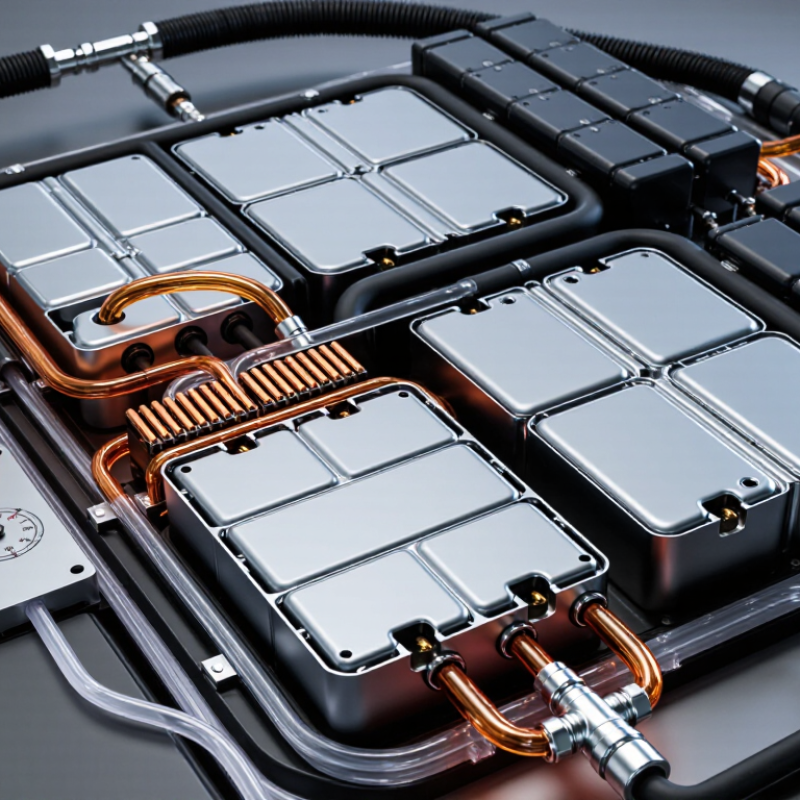
Table of Contents [Hide]
Battery Cooler Fundamentals: Air, Liquid, and Refrigerant-Based Systems
Battery cooler selection begins with heat load, pack layout, and duty cycle. Air cooling uses ducts and fans, so it is relatively simple and easy to inspect. But airflow can leave cells near the outlet warmer than cells near the inlet. Liquid systems circulate coolant through cold plates, removing heat more evenly in many compact, high-load packs. They add pumps, hoses, seals, and leak checks.
Refrigerant-based systems use a refrigeration circuit to cool the battery, often through a chiller or dedicated Heat Exchanger. They can provide strong cooling in hot conditions, but controls and service requirements are more involved.There is no perfect setup. IEA’s Global EV Outlook 2024 reported that electric-car battery demand exceeded 750 GWh in 2023, highlighting the scale of thermal-management needs. That figure does not determine which cooling method suits a particular pack.
Tips: Compare temperature uniformity, energy use, noise, maintenance access, and performance during fast charging. Ask suppliers for test conditions, not just peak cooling figures. Check how the system handles cold starts, too. A specification can look convincing while missing real-world airflow blockage or coolant aging.