
-
- Products
- Indoor Household Cords
- Appliance Cords
- General Purpose Short-Length Cords
- General Purpose Extension Cords
- Landscape & Decorating Cords
- Bright Color Extension Cords
- Oil-Resistant Extension Cords
- Cold-Flex Extension Cords
- VividFlex Power Cords
- EXTREME All-Weather Cords
- Cord Management
- Task Lights
- Adapters & GFCI Devices
- Where to Buy
- About
- Careers
- Glossary
- Catalog


2026 Best Power Generator Types for Global Buyers?
Choosing the best Power Generators in 2026 requires more than comparing rated wattage or purchase prices. Global buyers face different grid frequencies, voltage standards, fuel supplies, climate conditions, and import requirements. A generator that performs reliably on a European construction site may need modification for a tropical warehouse or a remote mining camp. Real-world selection starts with the load profile: starting current, continuous demand, operating hours, and acceptable noise levels.
This guide examines diesel, gasoline, natural gas, dual-fuel, inverter, battery, solar-hybrid, and emerging low-emission generator systems. Diesel models remain strong for heavy-duty applications, while inverter generators suit sensitive electronics and quieter operation. Gas and dual-fuel units can reduce fuel-storage pressure where infrastructure is available. Battery and solar-hybrid systems offer cleaner temporary power, but their performance depends on sunlight, storage capacity, and duty cycles. Hydrogen options may attract attention in 2026, although availability, maintenance expertise, and total cost still require careful evaluation.
Practical experience shows that the cheapest unit is rarely the lowest-cost solution. Fuel consumption, spare-parts access, technician training, warranty coverage, and emissions compliance can change the final decision. International buyers should verify certifications, local service support, and compatibility with regional electrical standards before ordering. No ranking fits every market. Even detailed comparisons can miss local conditions. That limitation matters. The most reliable choice balances power quality, resilience, operating cost, environmental goals, and long-term support.
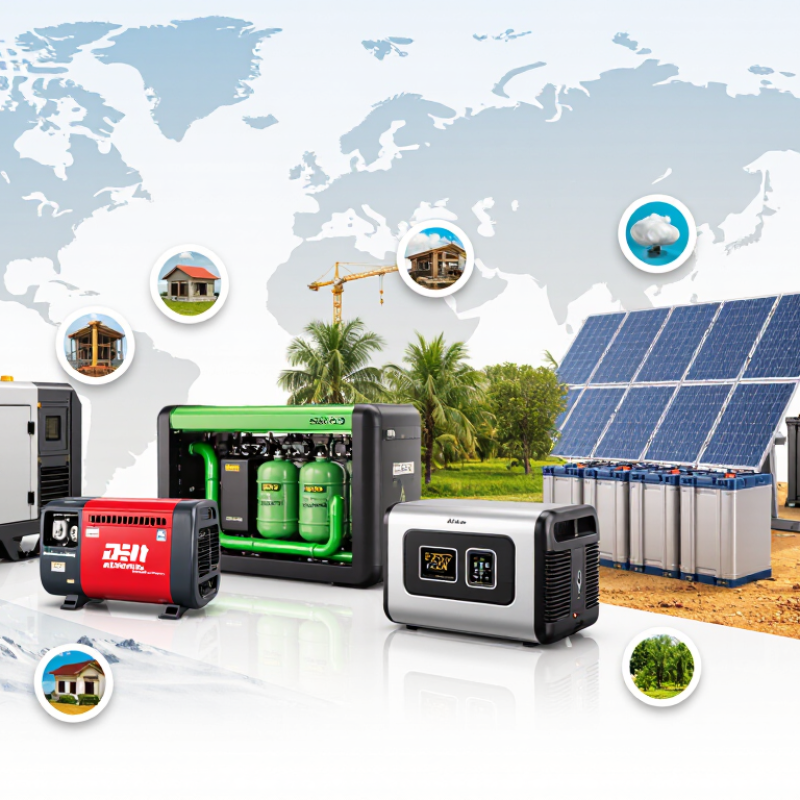
Table of Contents [Hide]
What Is a Power Generator and How Does It Work?
A power generator converts mechanical energy into electrical energy. Most models use an engine, alternator, fuel system, control panel, and cooling system. The engine turns a shaft inside the alternator. This movement creates an electromagnetic field. Electricity then flows through the output terminals to connected equipment.
The process is practical, but not completely simple. Fuel powers the engine, while the governor controls rotation speed. Stable speed helps maintain a consistent electrical frequency. The voltage regulator adjusts electrical pressure as loads change. When a motor starts, it may demand several times its normal power. A small generator can struggle here. Careful load calculations matter.
Global buyers usually compare diesel, gasoline, natural gas, and hybrid generator types. Diesel units often suit long operating hours and demanding industrial sites. Gasoline models are lighter and useful for temporary, lower-power work. Natural gas systems can provide cleaner operation where pipelines are reliable. Hybrid systems combine generation with battery storage. They can reduce fuel use, but controls may require more technical support.
Look at voltage, frequency, phase, altitude rating, noise, emissions rules, and spare-part access. Do not judge capacity from the largest advertised number. Rated power is more useful than short-term peak power. Installation conditions also affect performance. Dust, heat, poor ventilation, and neglected filters reduce output. The explanation sounds straightforward, yet real sites are rarely perfect. A generator must match the people, climate, workload, and maintenance skills available.